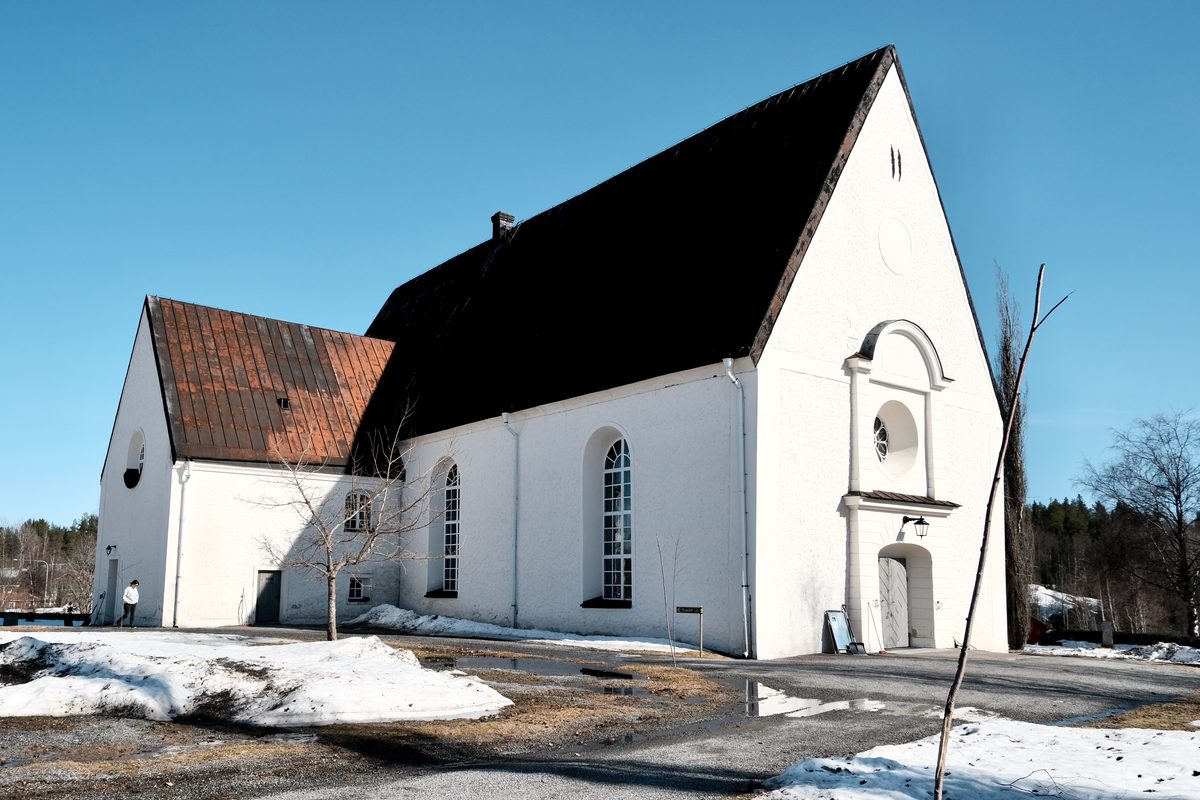
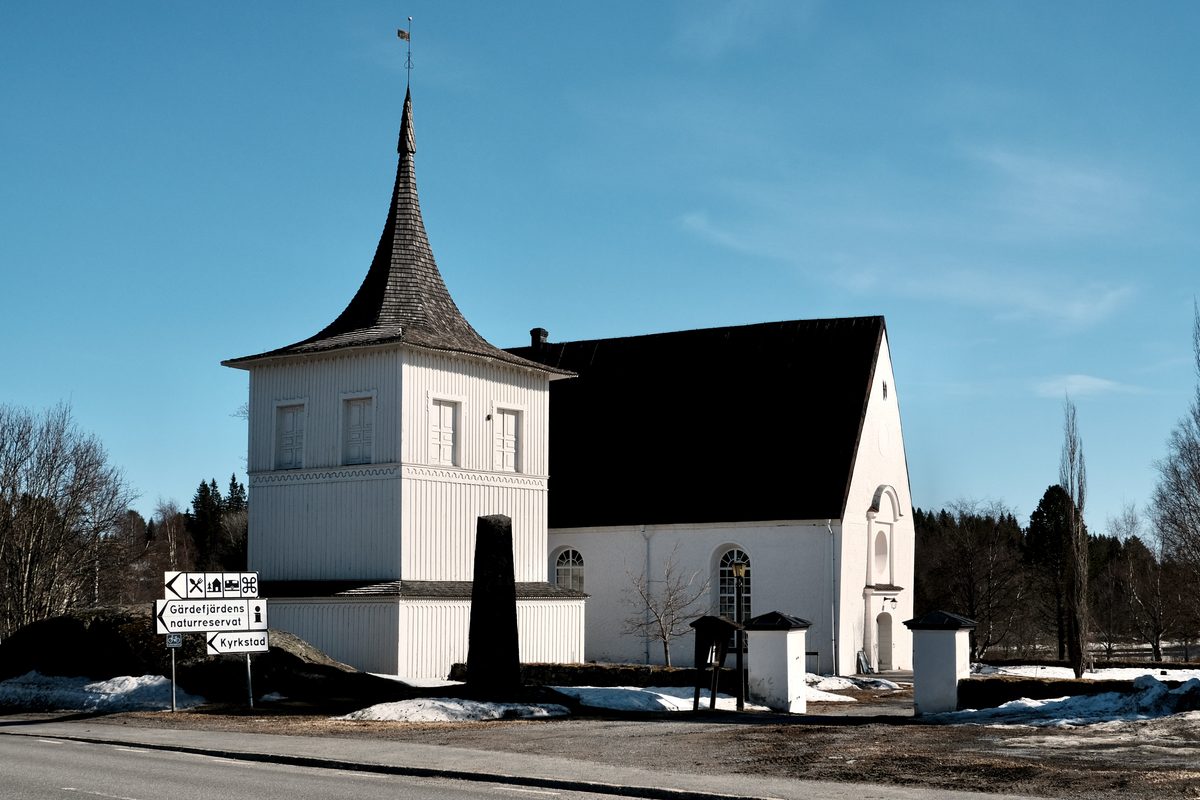
The church at Gamla Uppsala looks modest, and that is misleading. Until 1273 this was the seat of Sweden’s archbishop — the cathedral of the country — before the see moved down to Östra Aros, which was promptly renamed Uppsala. So this is not a village church that grew. It is what was left standing when a cathedral shrank.
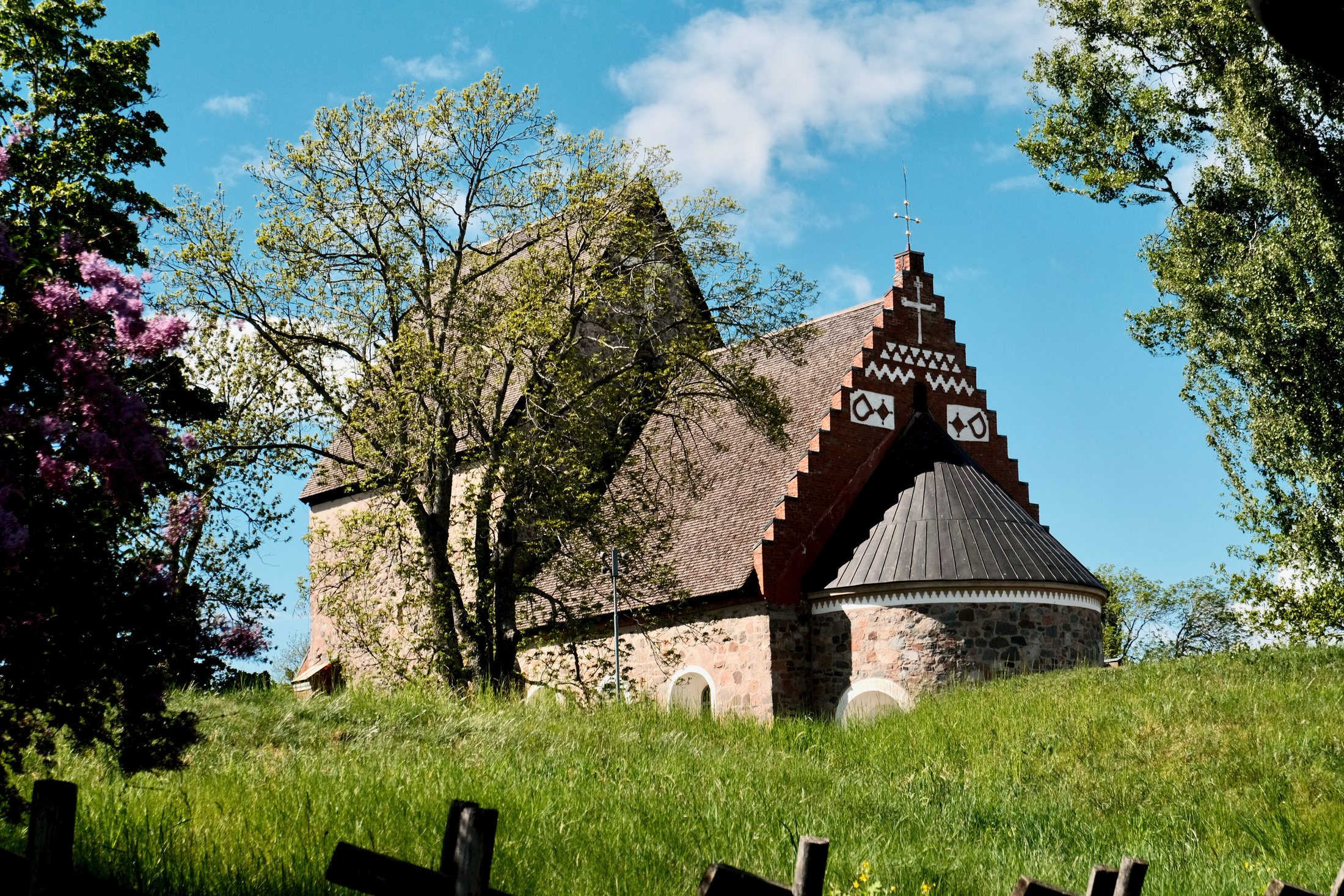
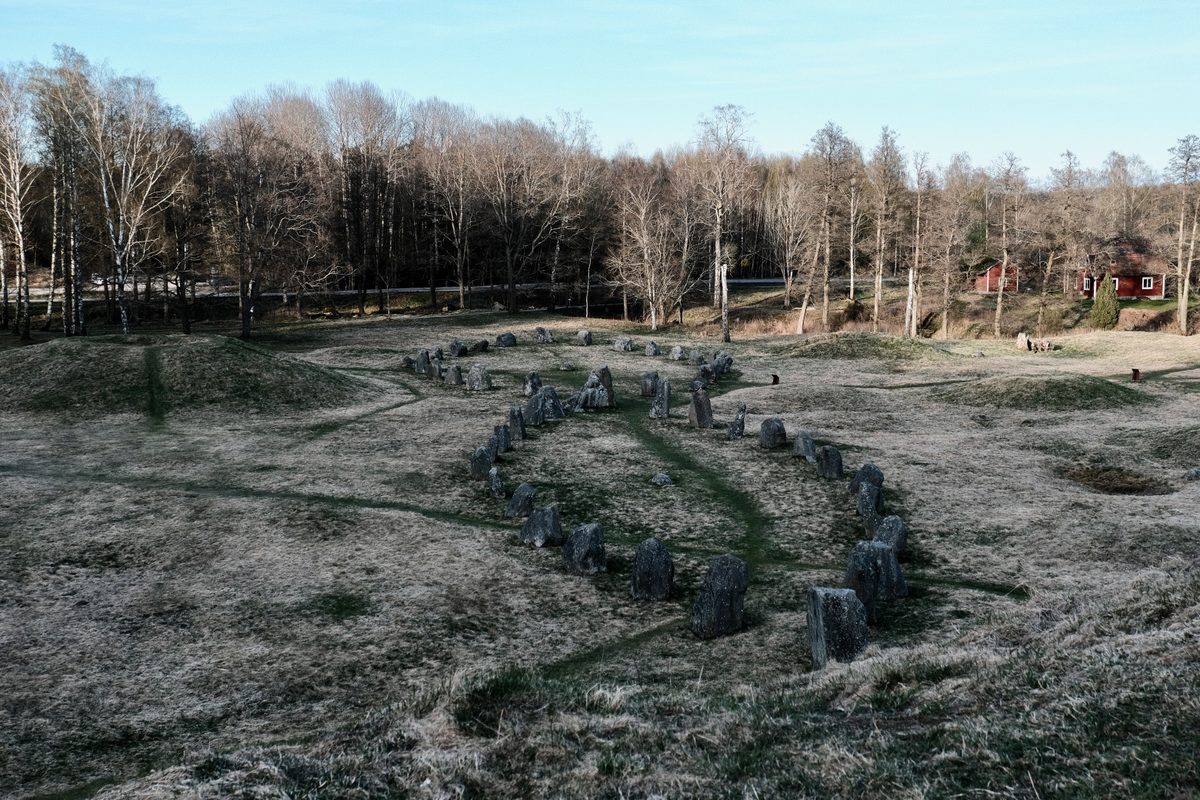
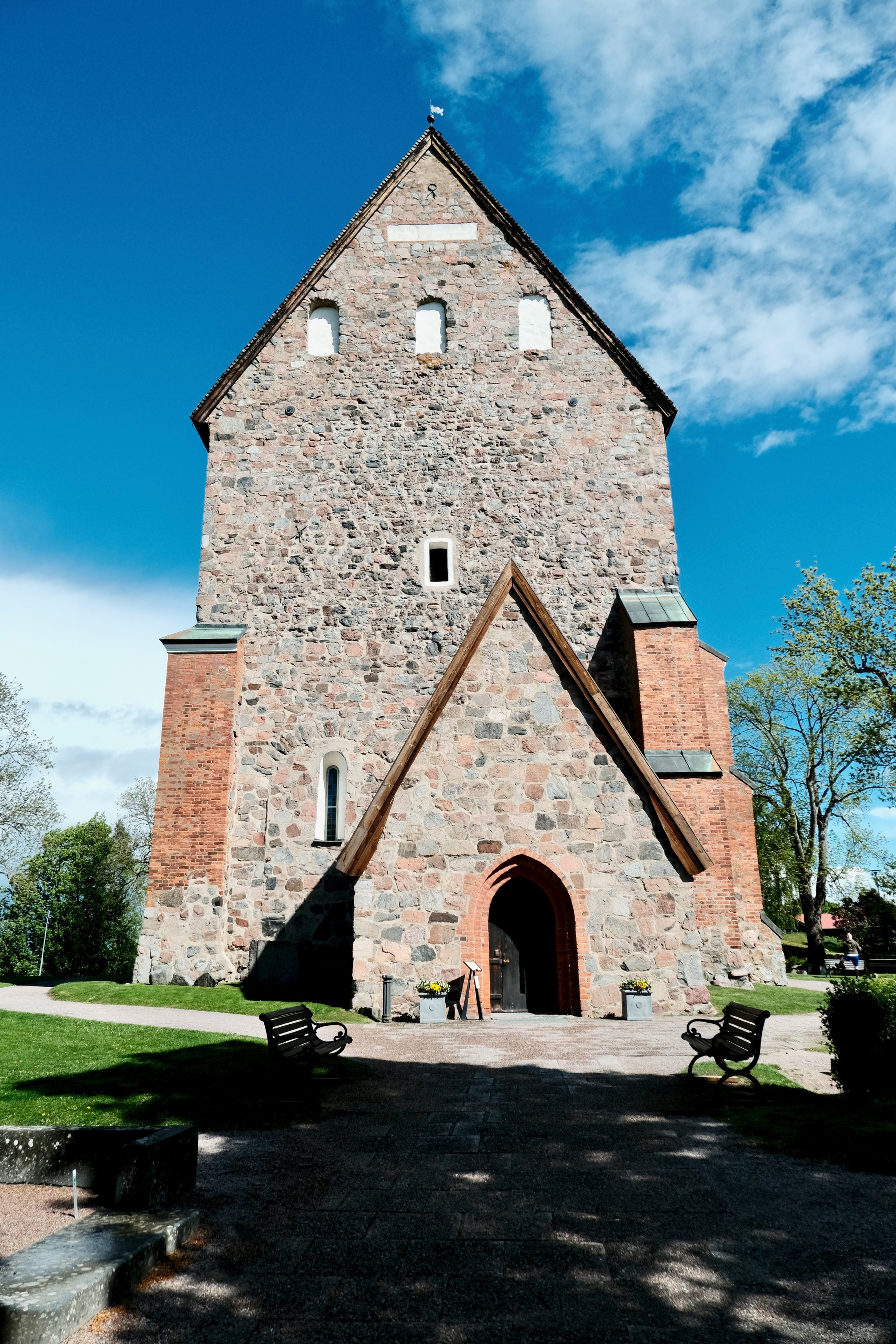
The royal burial mounds are a few minutes’ walk away, and the two things belong together. Christianity did not arrive here on empty ground. It put its cathedral beside the graves of the pre-Christian kings, in full view of them, which was not an accident. The church is grey stone with brick detailing and a steep roof, and from the front it is heavier and more direct than the distant view prepares you for.
Stone, wood, and memory
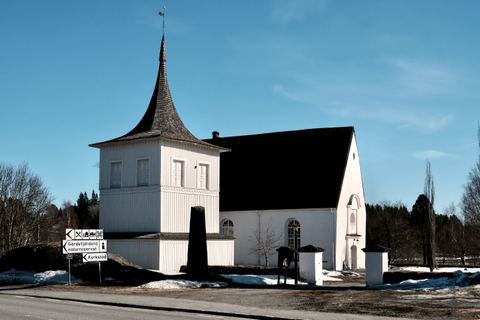
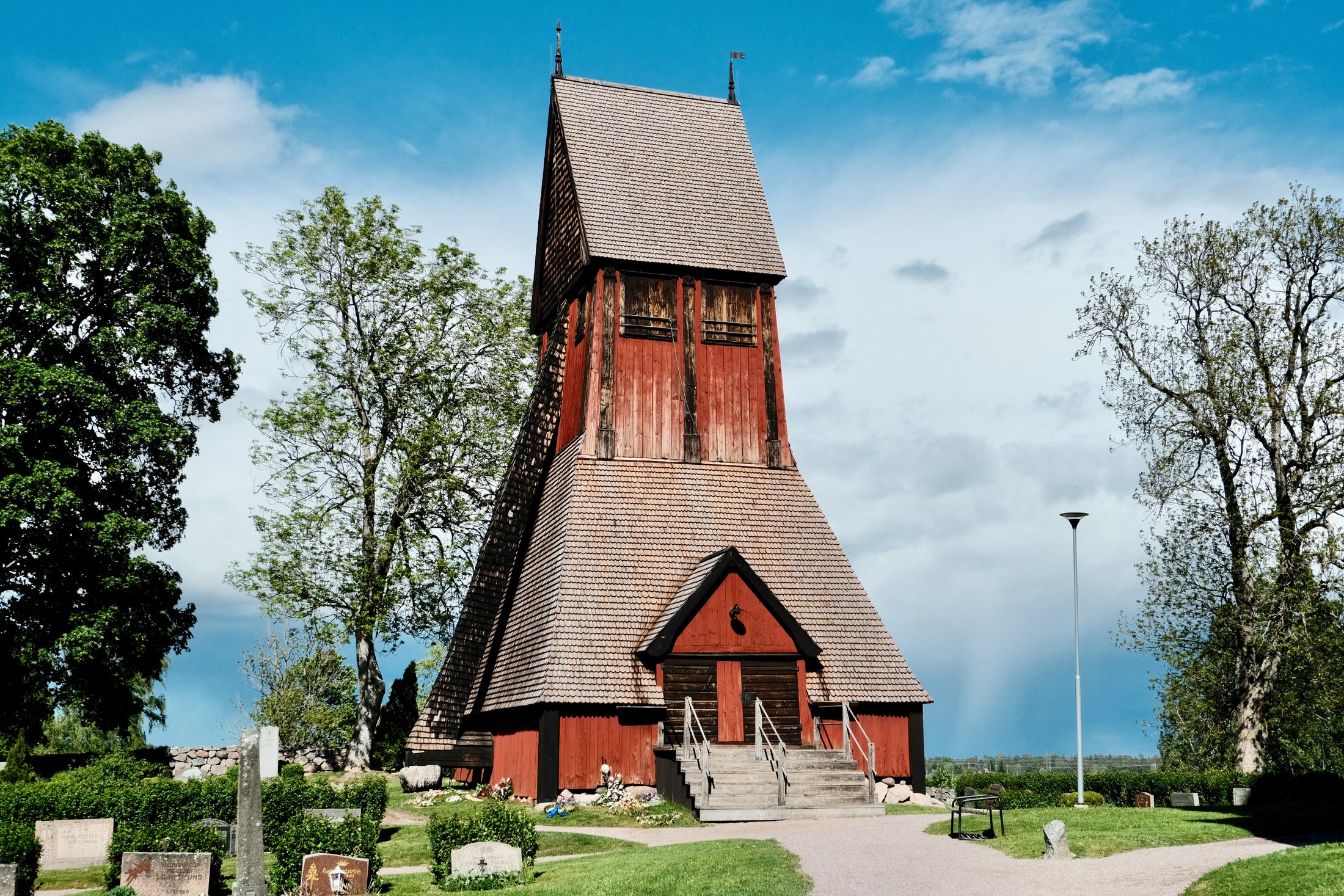
The bell tower beside it is timber, red, with a shingled roof — a lighter material answering the stone. Freestanding bell towers like this are a common sight in Swedish churchyards, and the pairing here works because neither building is trying to outrank the other.
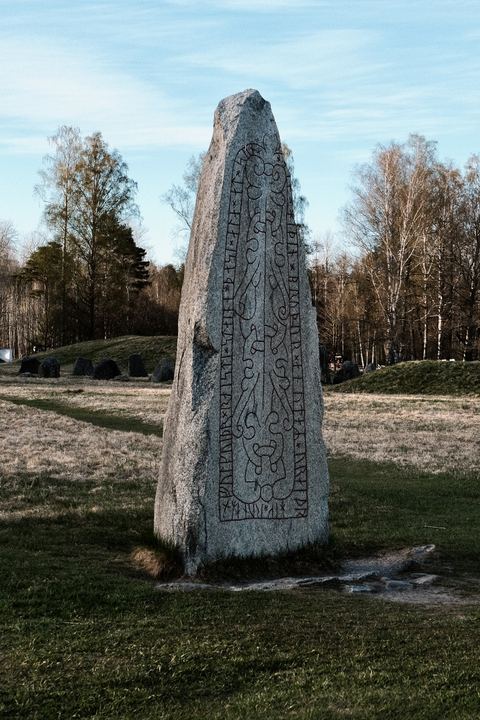
Set into the church wall is Runestone U 978, and its history is rougher than its present dignity suggests. In the fourteenth century the church cut the stone down into a square and used it as an altar table, destroying part of the inscription in the process. It stayed an altar for roughly five hundred years. When a new one arrived in the mid-1800s, the old stone was mortared into the outside wall, where it is now. What survives of it reads: “Sigvid, the England traveller, raised this stone in memory of Vidjärv, his father …”
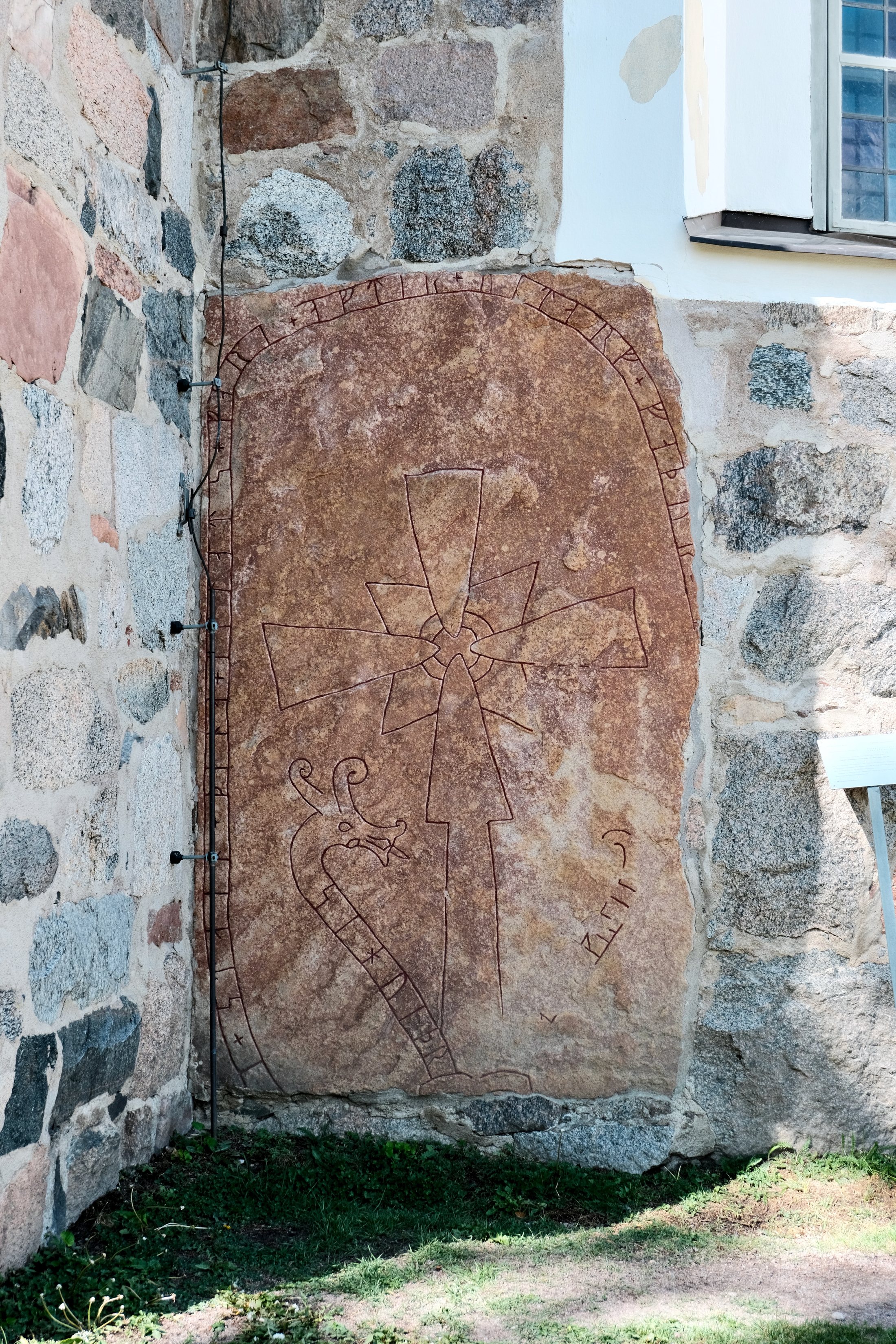
At Old Uppsala, history is not held in a single monument. It is spread across stone, timber, grass, inscriptions, and the quiet spaces between them.
A man who had sailed to England put up a stone for his father. The church broke it, absorbed it into the altar, then centuries later set the remains in a wall as a curiosity. That sequence is what preservation usually looks like up close — not reverence, but reuse, and then a change of mind.