Lövånger Church

In Lövånger, a white historic church, a wooden bell tower, and a preserved church town stand together in the quiet landscape of Västerbotten. This story follows a spring visit shaped by clear northern light, melting snow, red timber cottages, and the calm rhythm of Swedish cultural heritage.

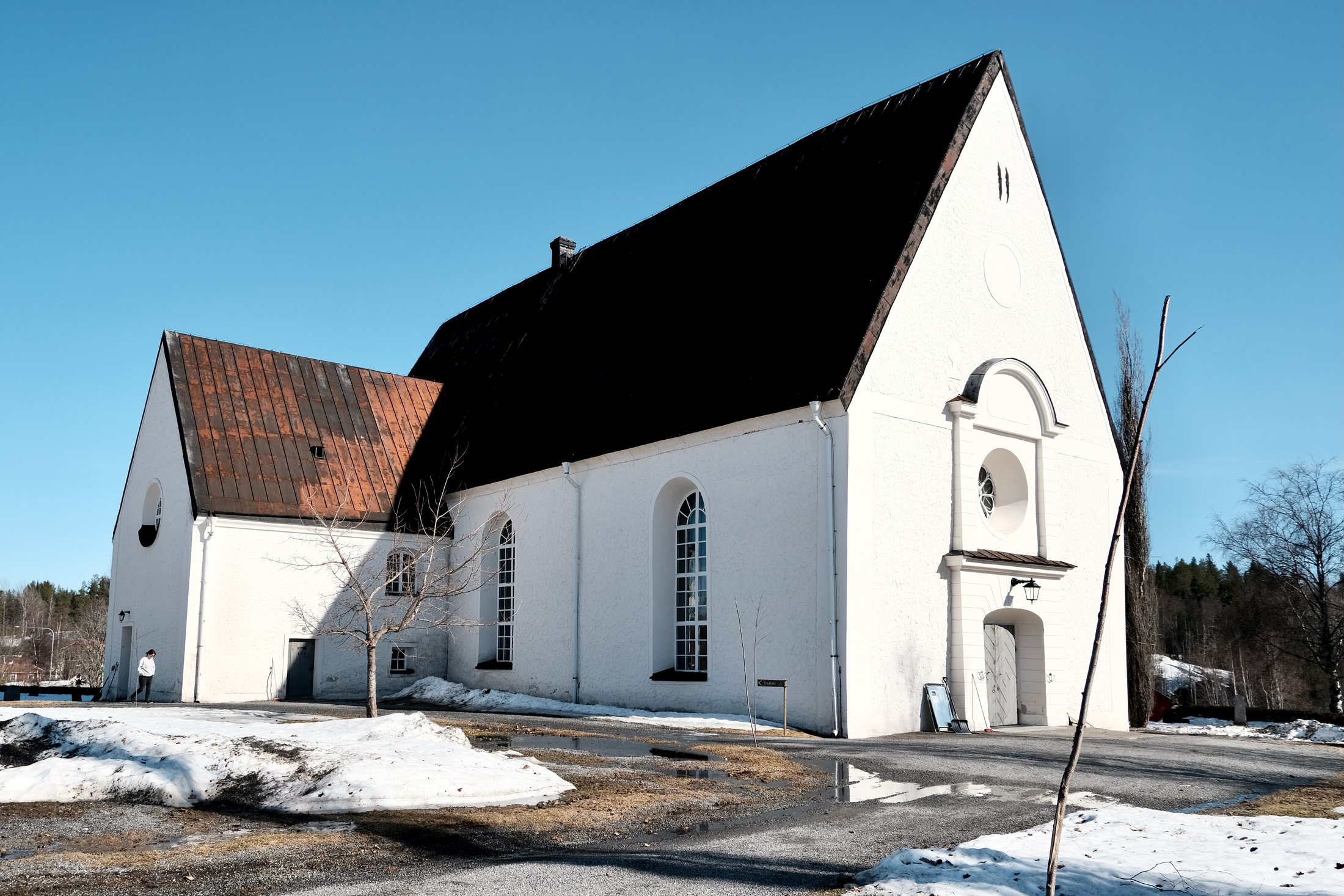
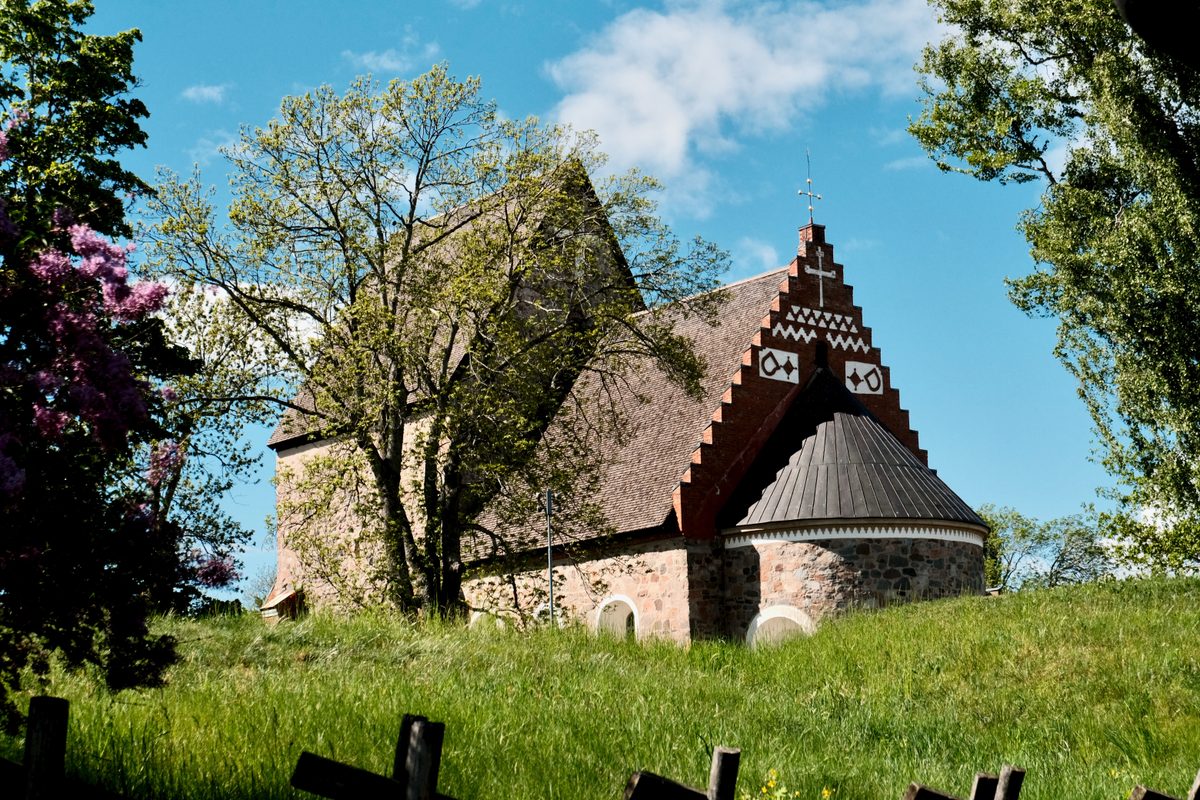
Lövånger Church in Västerbotten, Sweden, seen from the side with white walls, a dark roof, patches of snow, bare trees, and a clear blue spring sky.

Lövånger Church stands in a quiet part of Västerbotten, surrounded by open light, snow traces, road signs, and the stillness of early spring. The first impression is simple and clear: white walls, a dark roof, a wooden bell tower, and a landscape that feels calm rather than monumental. Nothing here feels staged. The place carries its history with restraint.

Lövånger Church in Västerbotten, Sweden, seen from the side with white walls, a dark roof, patches of snow, bare trees, and a clear blue spring sky.
Lövånger Church stands in sharp spring light, its white walls and dark roof contrasting with melting snow and the clear northern sky.

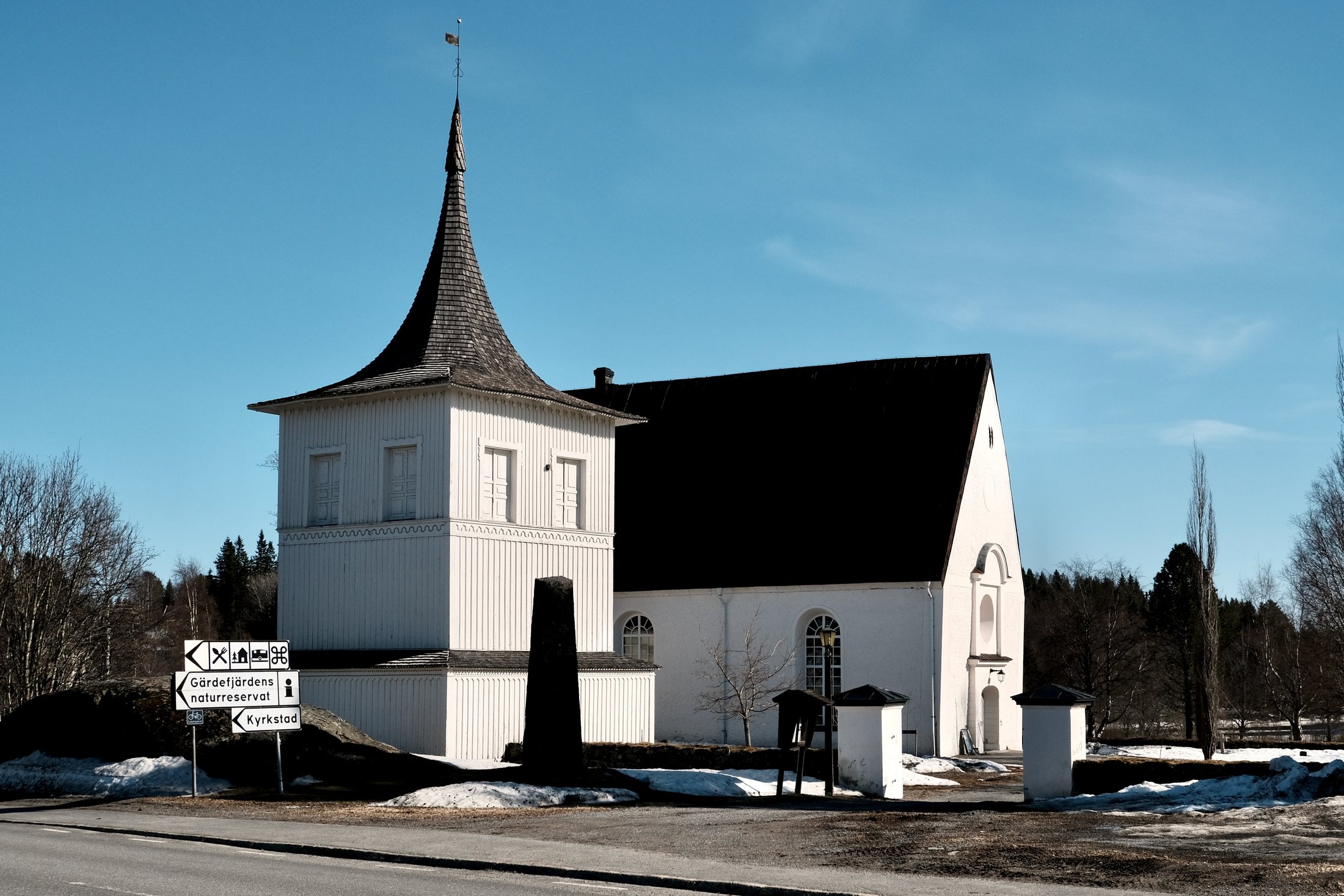
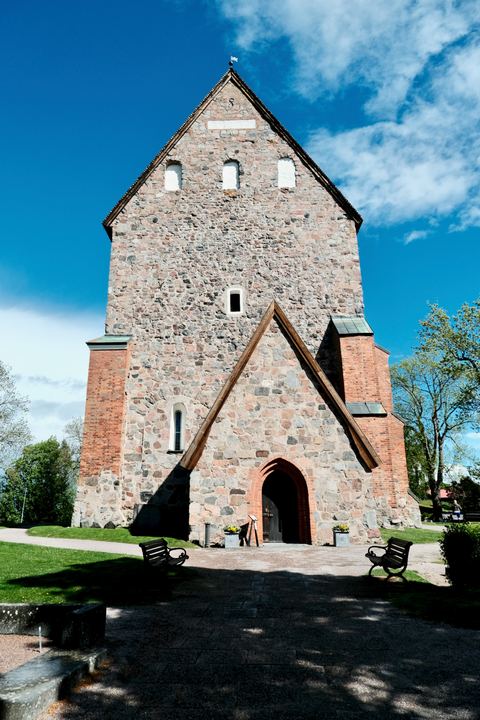
From another angle, the church appears more connected to its surroundings. The bell tower, the patches of snow, and the road leading past the site all place the building within everyday life. It is not only a historic object, but part of a lived landscape — a church beside roads, trees, signs, and the seasonal change of northern Sweden.

Lövånger Church in Västerbotten, Sweden, with a white church building, wooden bell tower, road signs, patches of snow, and a clear blue sky.
Lövånger Church stands in clear spring light, its white walls and wooden bell tower set against snow, road signs, and the quiet landscape of Västerbotten.

The church town beside the church

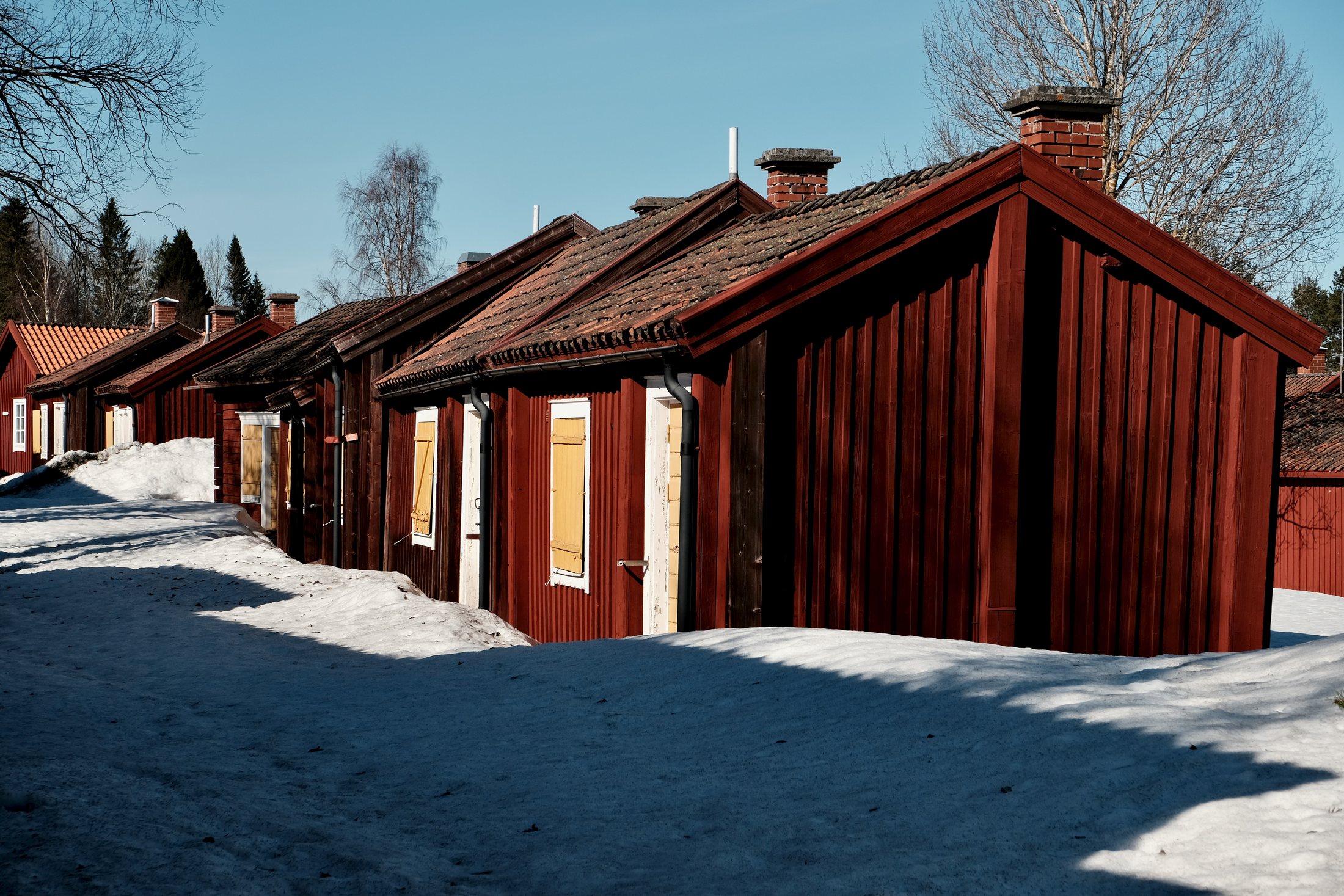
Close to the church, Lövånger Kyrkstad preserves another layer of the place. The red wooden cottages form a small historic church town, built around the practical and social life connected to church visits. Their scale is modest, but their presence is strong: timber walls, small windows, yellow doors, snow-covered paths, and the deep red color so closely associated with rural Sweden.

Red wooden church town cottages at Lövånger Kyrkstad in Västerbotten, Sweden, standing in spring snow under a clear blue sky.
Red wooden cottages line the snowy path at Lövånger Kyrkstad, preserving the quiet rhythm of a historic Swedish church town.

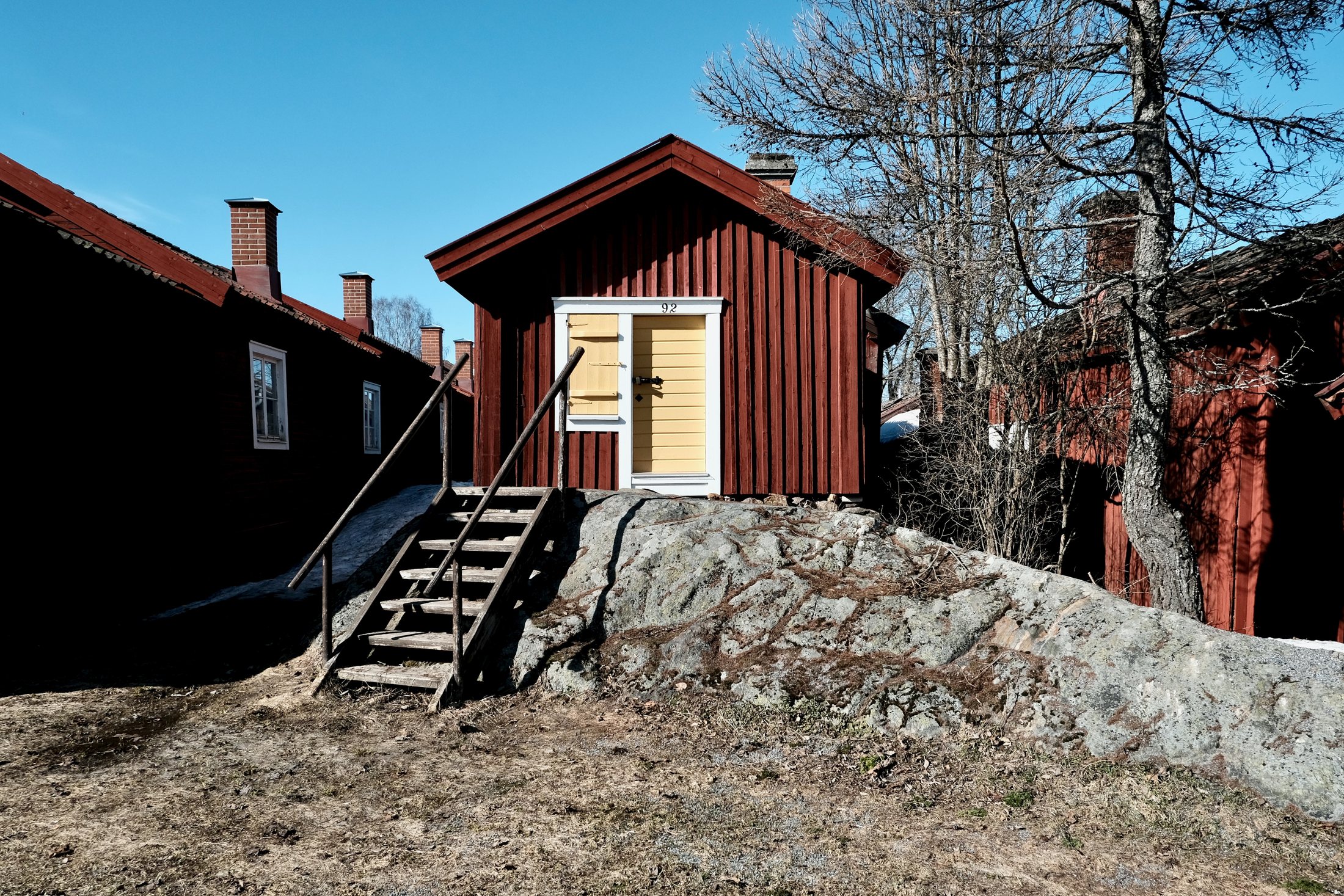
Individual cottages reveal the character of the church town more closely. A small red building stands on rock, reached by a simple wooden stair. Its yellow door and compact form give the place a human scale. The architecture is not decorative in a grand sense; its beauty comes from use, weather, material, and time.

A red wooden cottage at Lövånger Kyrkstad in Västerbotten, Sweden, standing on rocky ground with a yellow door, wooden steps, bare trees, and a clear blue sky.
A small red cottage at Lövånger Kyrkstad stands on the rock, its yellow door and weathered steps preserving the quiet character of the historic church town.

Wood, color, and weather

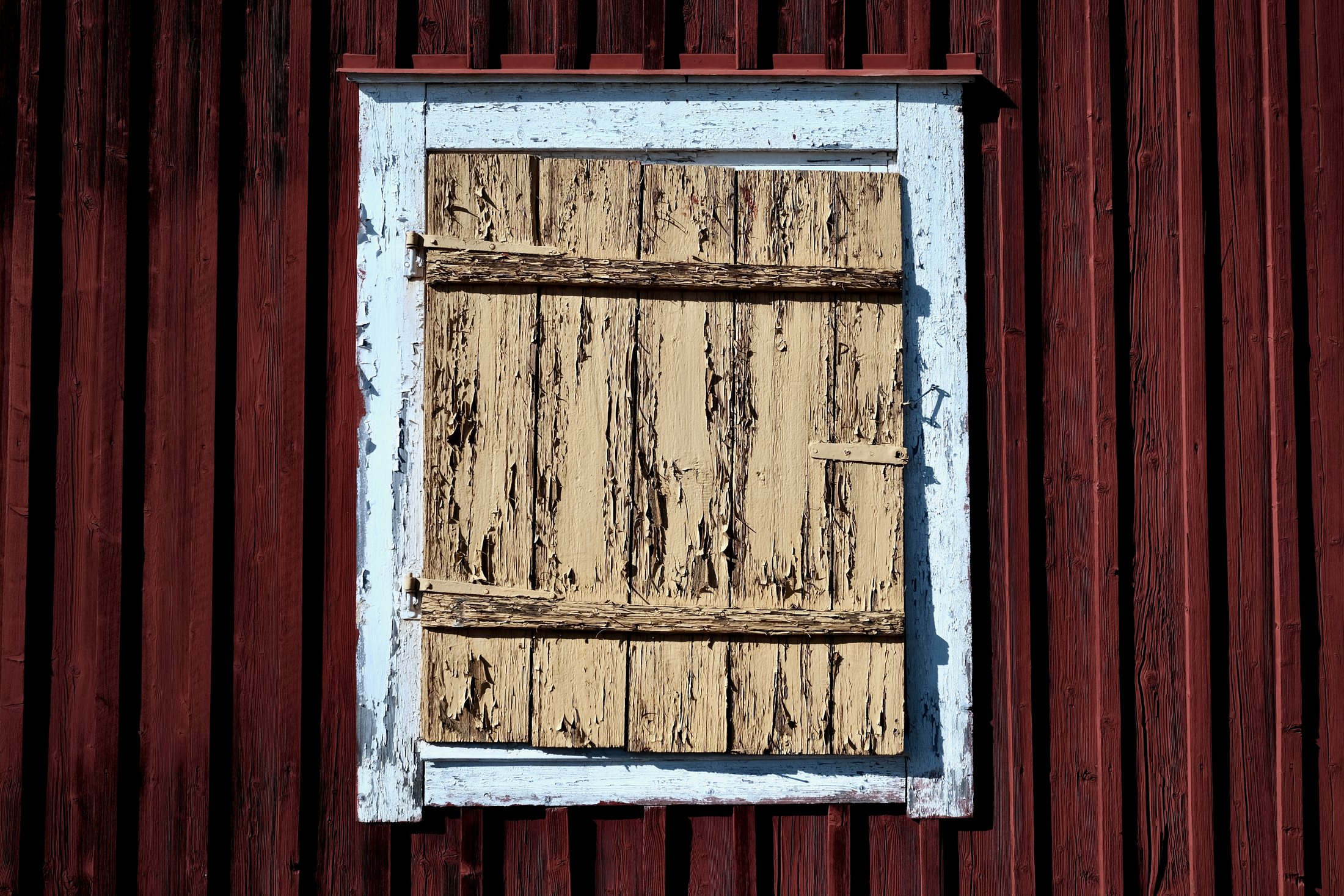
The details are as important as the wider views. A weathered shutter, peeling yellow paint, white trim, and red timber show how the buildings have aged in place. These surfaces make the history feel physical. They are not polished smooth; they hold marks of climate, repair, use, and exposure.

A close view of a weathered yellow wooden window shutter set into a red wooden building at Lövånger Kyrkstad in Västerbotten, Sweden.
A weathered yellow shutter set into red timber, preserving the texture, age, and quiet character of Lövånger Kyrkstad.
In Lövånger, history feels less like a monument and more like a settlement of wood, snow, light, and memory.

What remains after leaving Lövånger is the clarity of the place: the white church, the red cottages, the dark roofs, and the cold brightness of spring. It is a quiet historical landscape, built from practical forms and enduring materials. Its atmosphere comes from simplicity — and from the way each building still seems to belong exactly where it stands.