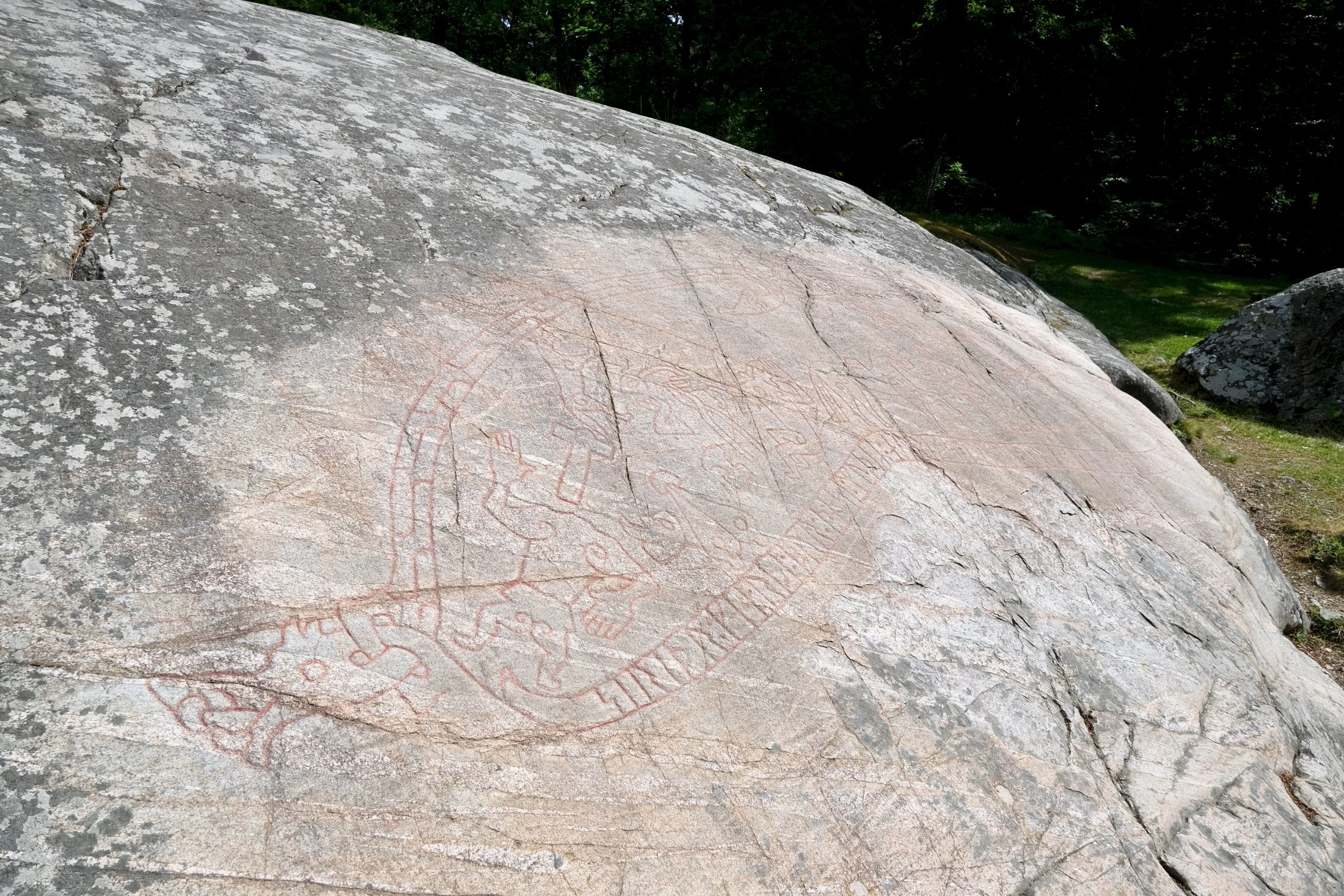
The Sigurd Carving lies almost flat, worked into the gently sloping back of a rock at Ramsund, a short way out of Eskilstuna near Sundbyholm. There is no monument hall around it, no glass — just the open stone, the grass at its edge, and a line of trees. You crouch to read it the way people have for nine hundred years, tracing the faint red grooves with your eyes.
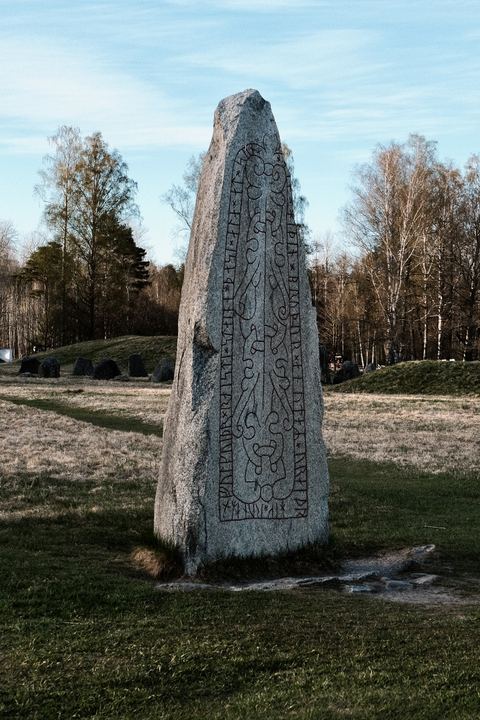
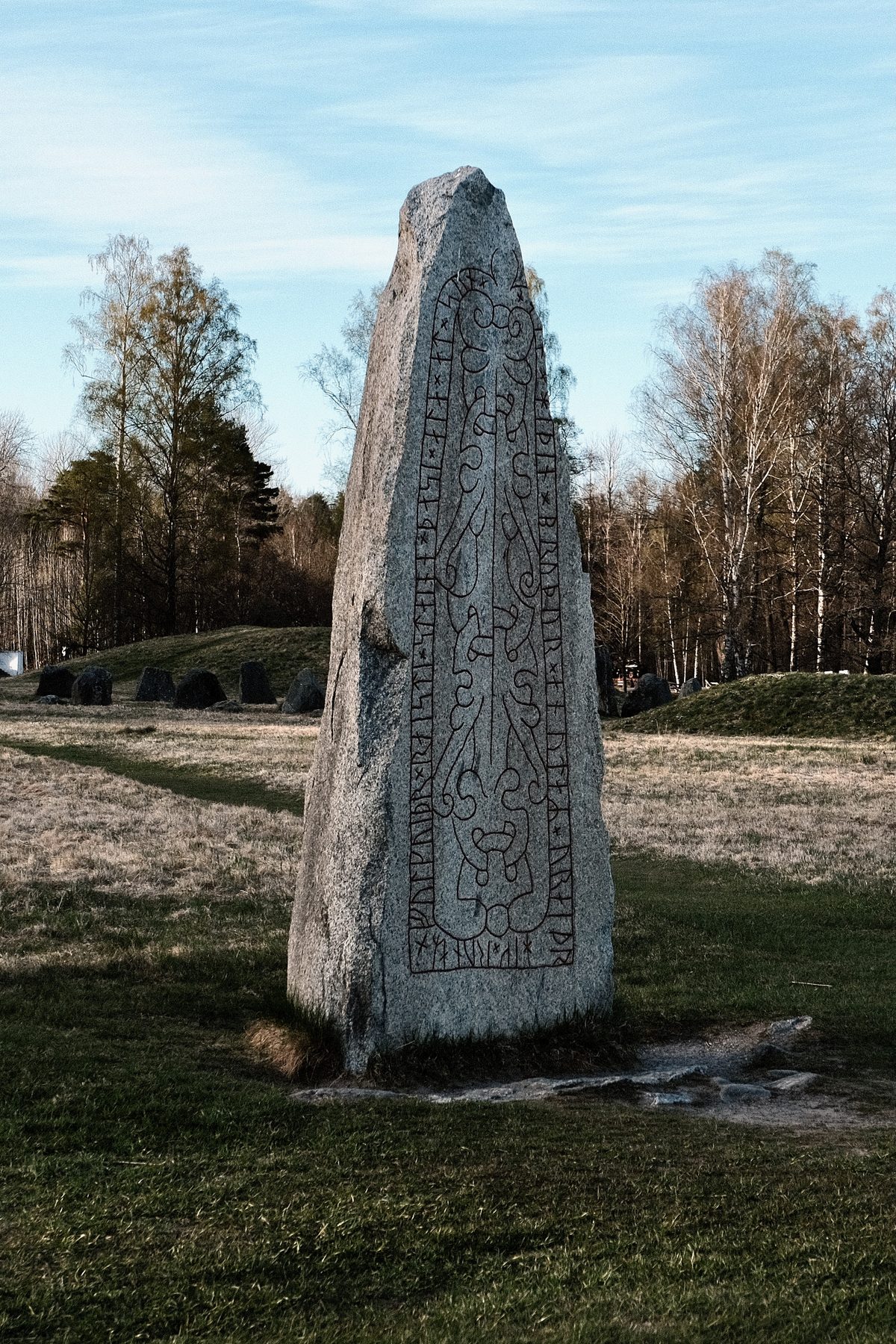
It was made in the eleventh century, and it works on two levels at once. Around the outside runs a long band of runes, and that band is also the body of a dragon. The text itself is sober and practical — it commemorates a woman who had a bridge built here, across the Ramsund channel — but the pictures inside the band tell something far older.
The saga in stone
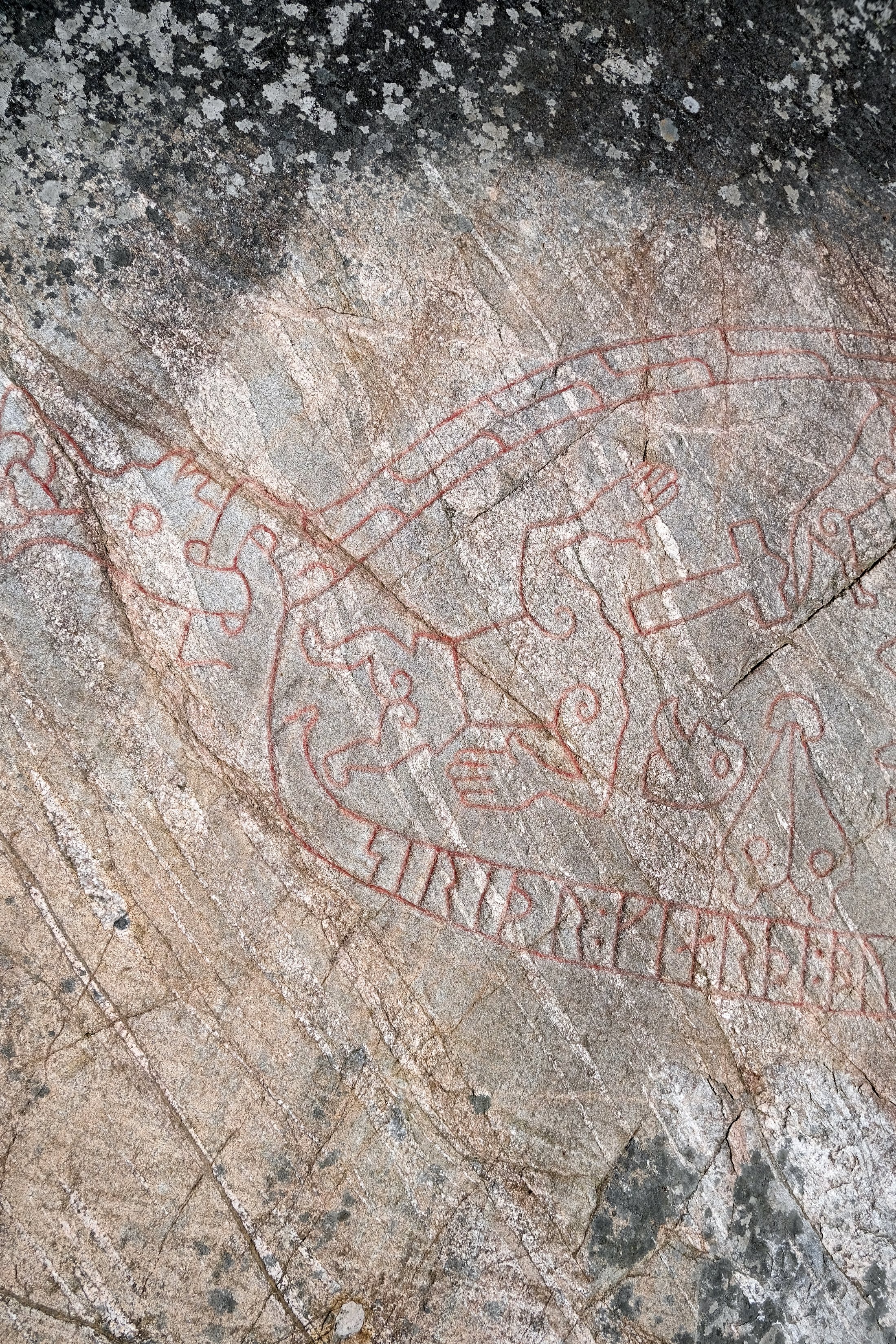
The scenes belong to the legend of Sigurd Fafnesbane, the dragon-slayer of Norse myth. Sigurd thrusts his sword up into the serpent Fafnir from beneath; nearby he roasts the dragon's heart over a fire and, burning his thumb, puts it to his mouth and tastes the blood — and in that instant understands the speech of birds.
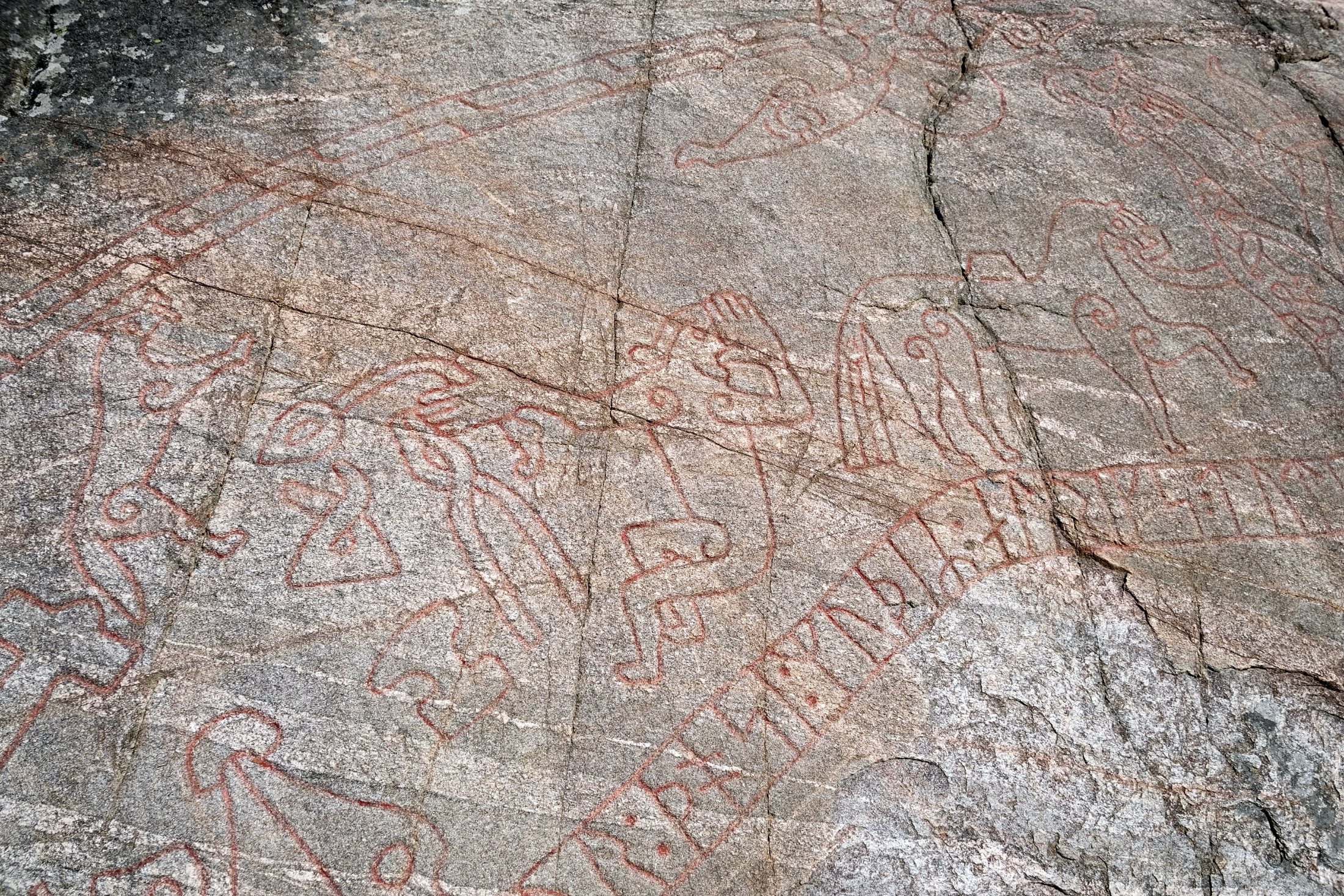
The birds, carved in the tree, warn him that Regin the smith means to betray him. Close by stands Grani, Sigurd's horse, loaded with the dragon's gold, and the headless figure of Regin lies among his own tools. A whole epic, compressed into a few square metres of granite.
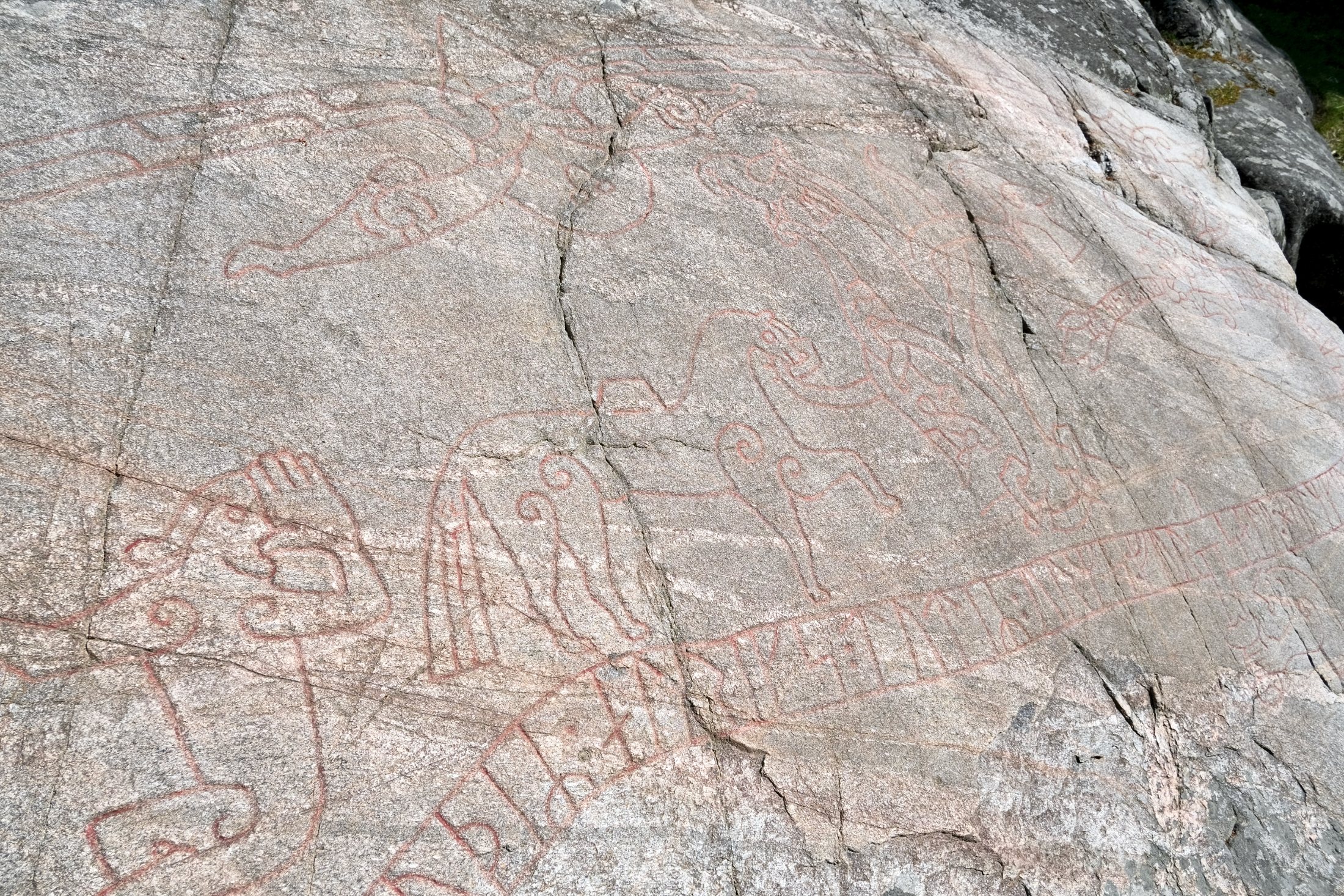
The doubleness is the thing. A Christian-era memorial about something as ordinary as a bridge, wrapped inside a heathen hero-tale the carver assumed everyone would recognise, with no sign that the two sat awkwardly together. The story reached Wagner and Tolkien eventually. Here it is still on the rock it was cut into, in its first language, faintly red.
I keep coming back to the bridge. Someone paid for a crossing, and to say so permanently they had a dragon cut around the sentence. That is not decoration. It is what you do when the only public writing surface in the district is rock, and you want your one inscription to be looked at.
A bridge for the living, a dragon for the dead — both cut into the same stone.