Runestones & Carvings
Sweden’s memory cut into stone — rune inscriptions and the Sigurd carving at Ramsund, gathered from across the journal’s ancient sites.
12 photographs
Photographs in Runestones & Carvings
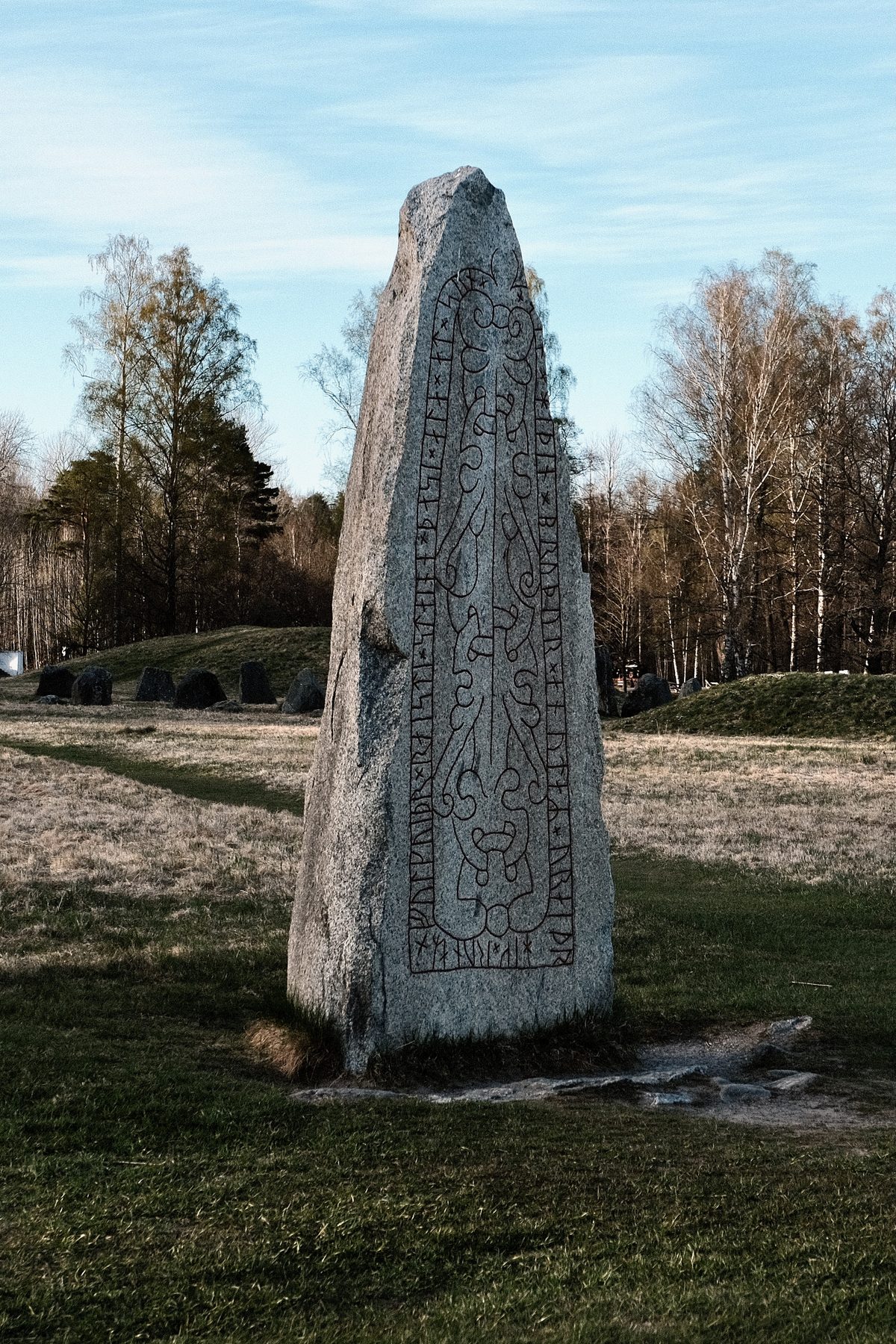
The Anundshög Runestone, Vs 13, bears the inscription: “Folkvid raised all these stones in memory of his son Heden, Anund’s brother. Vred carved the runes.”From the story: Anundshög
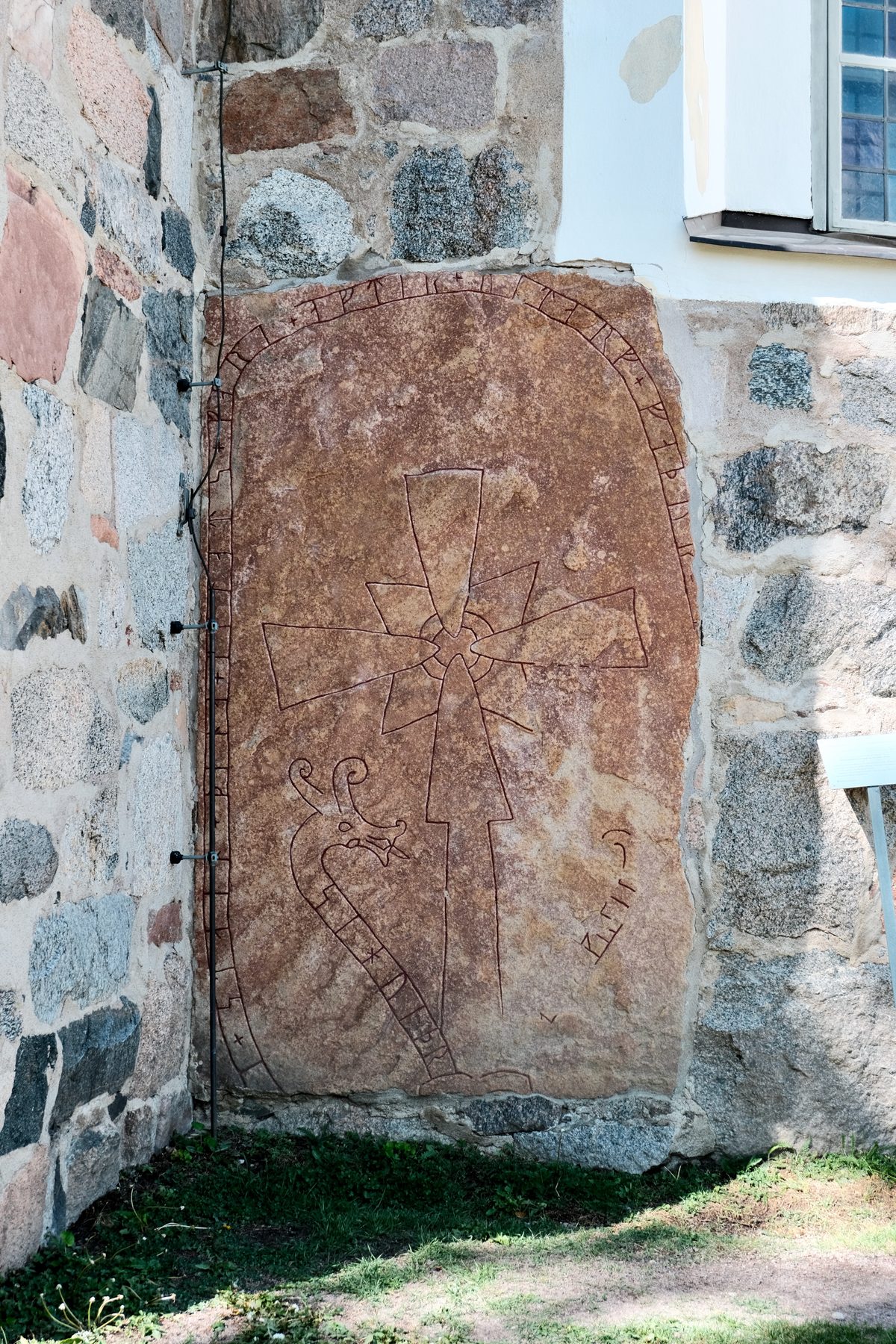
Runestone U 978, set into the wall of the Church of Old Uppsala, carries the inscription: “Sigvid, the England traveller, raised this stone in memory of Vidjärv, his father …”From the story: Church of Old Uppsala
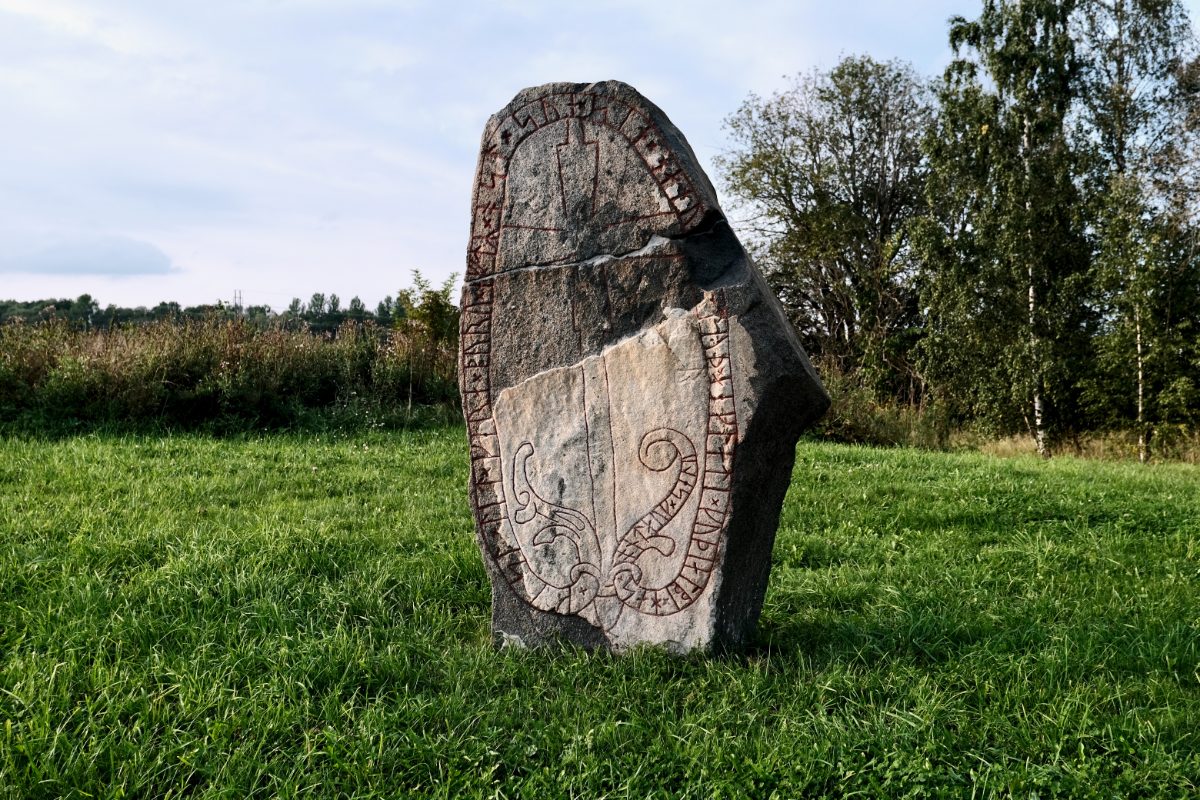
Raised by Gísl in memory of his son Ásl, who died in England — its runes still traced in red across the granite.
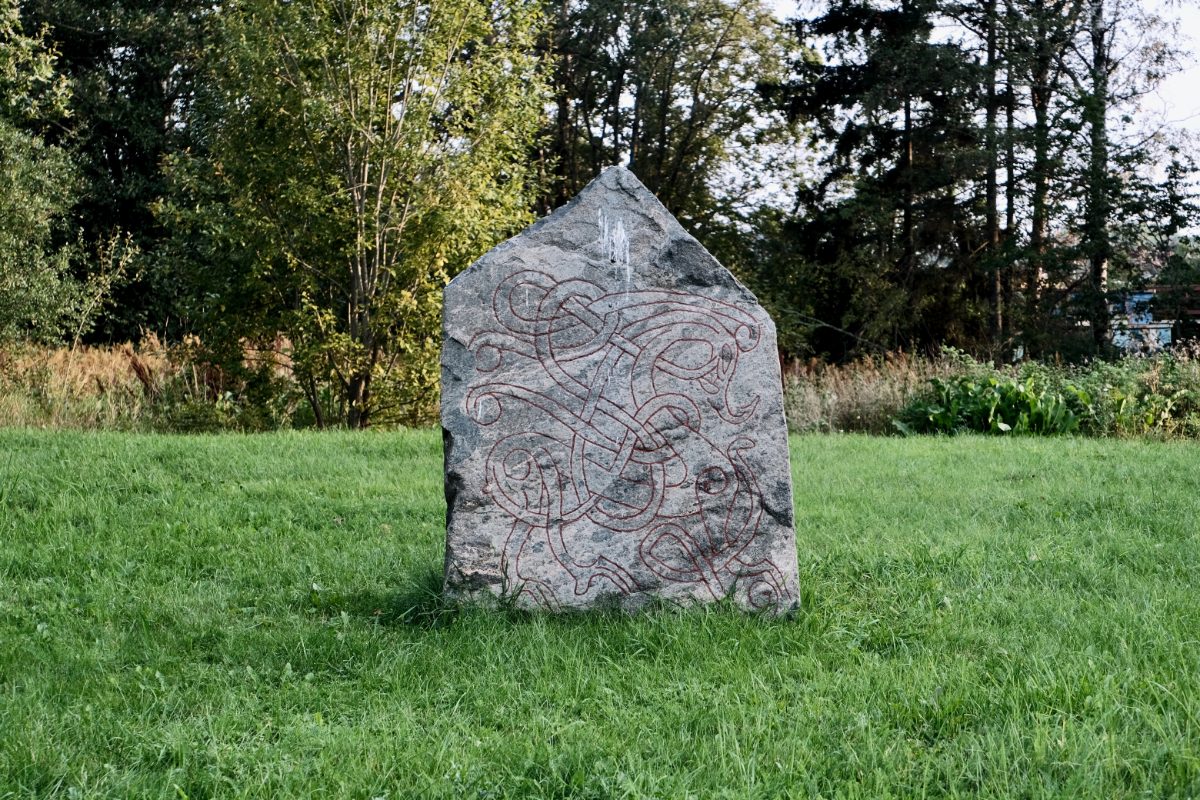
Attributed to the carver Livsten, its whole face is filled by a single looping serpent in red.
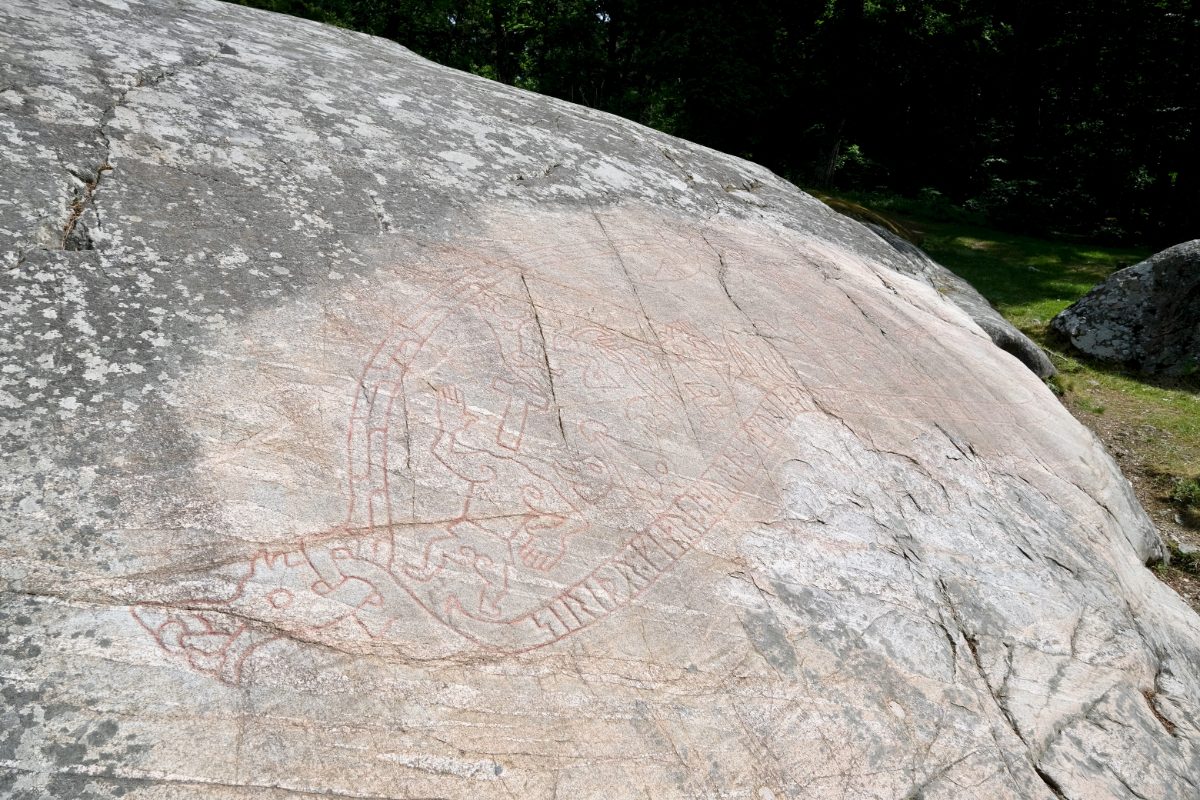
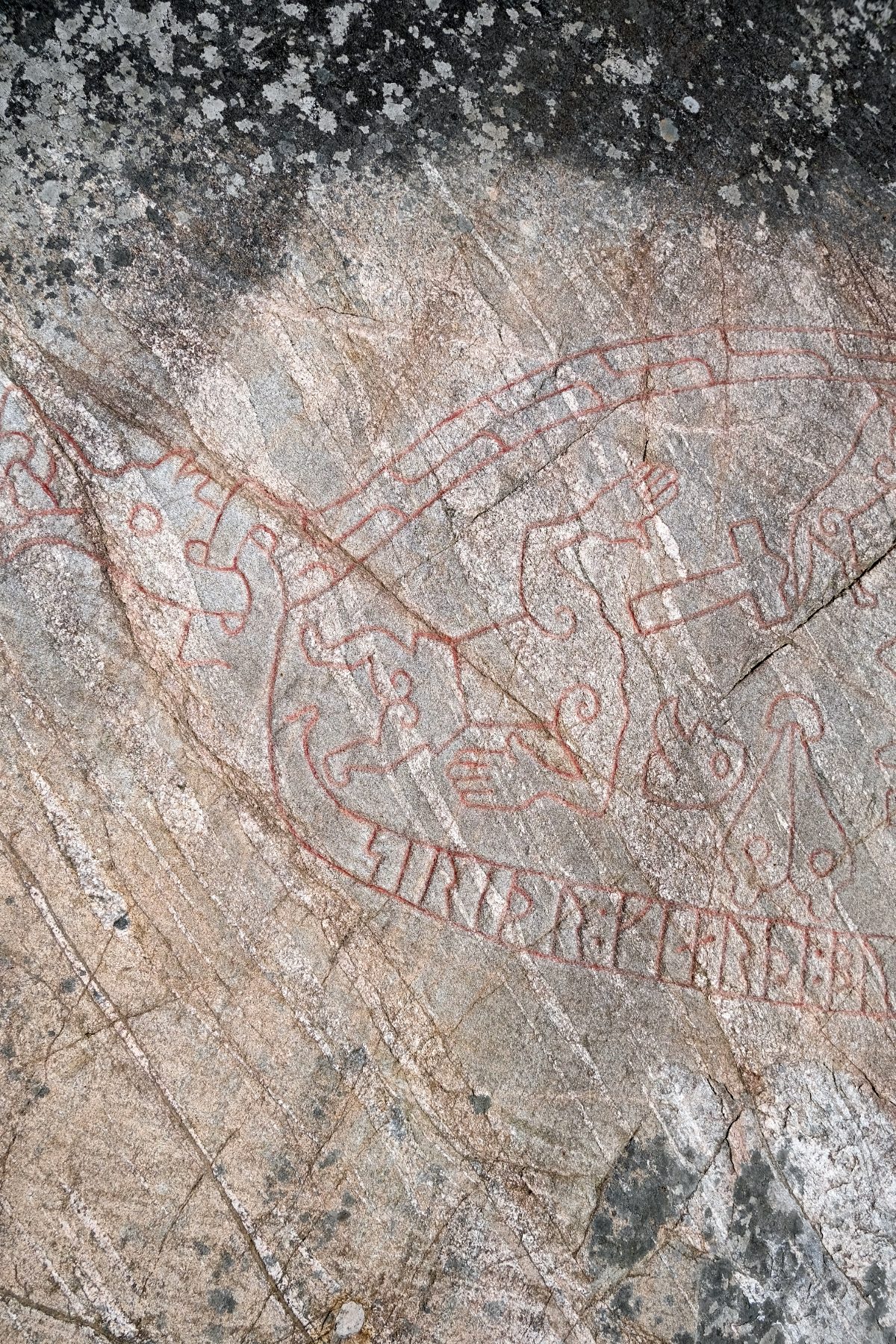
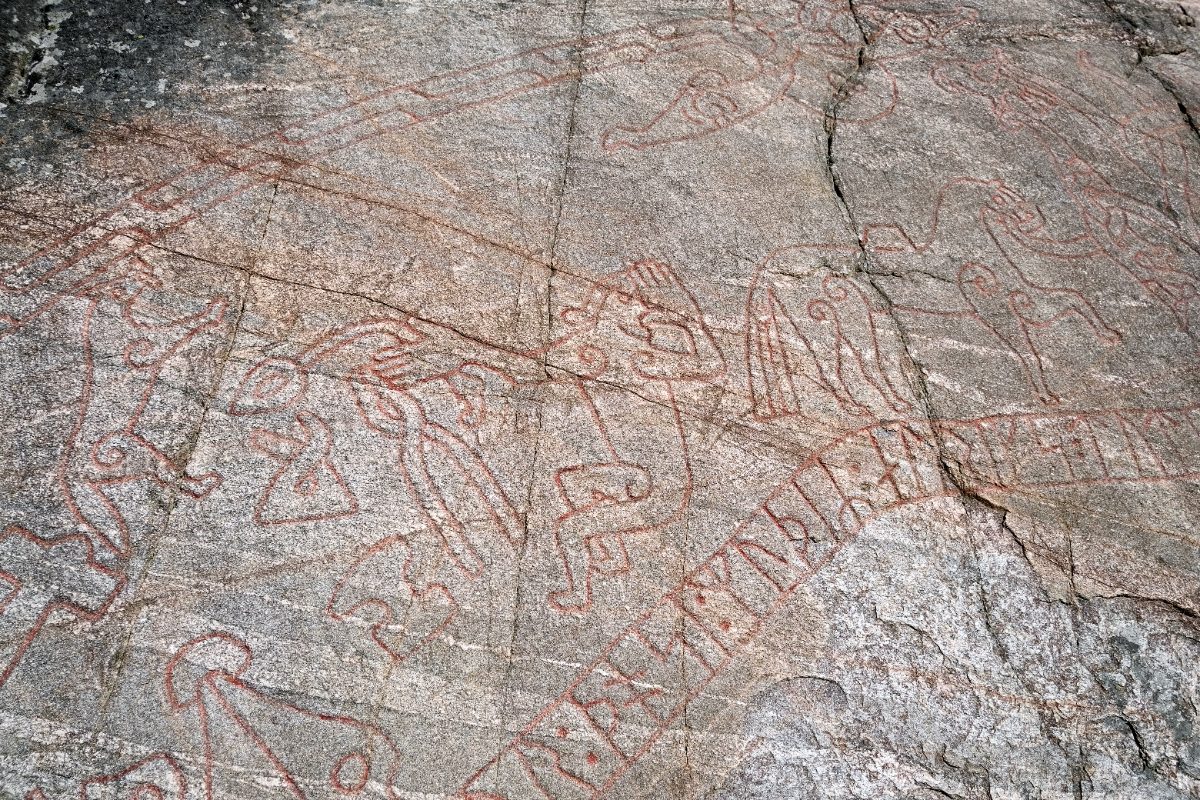
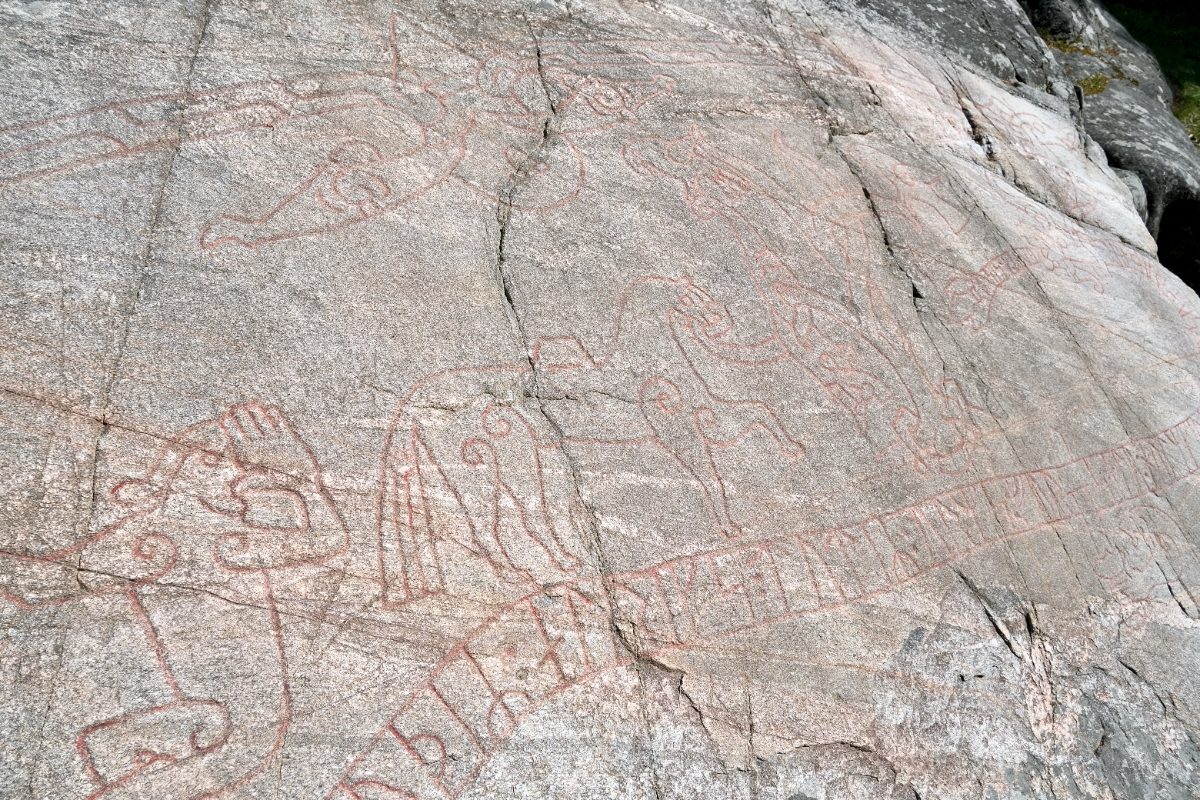
An eleventh-century rock carving retelling the saga of Sigurd the dragon-slayer, its runic band recording a bridge raised across the Ramsund channel.From the story: The Sigurd Carving at Ramsund
The dragon's body carries the runes — the memorial text recording a bridge raised across the Ramsund channel.From the story: The Sigurd Carving at Ramsund
Saga figures in red: beasts and a bird from the Sigurd legend, threaded above the runic band.From the story: The Sigurd Carving at Ramsund
The horse Grani and the saga's birds, carved above the running line of runes.From the story: The Sigurd Carving at Ramsund
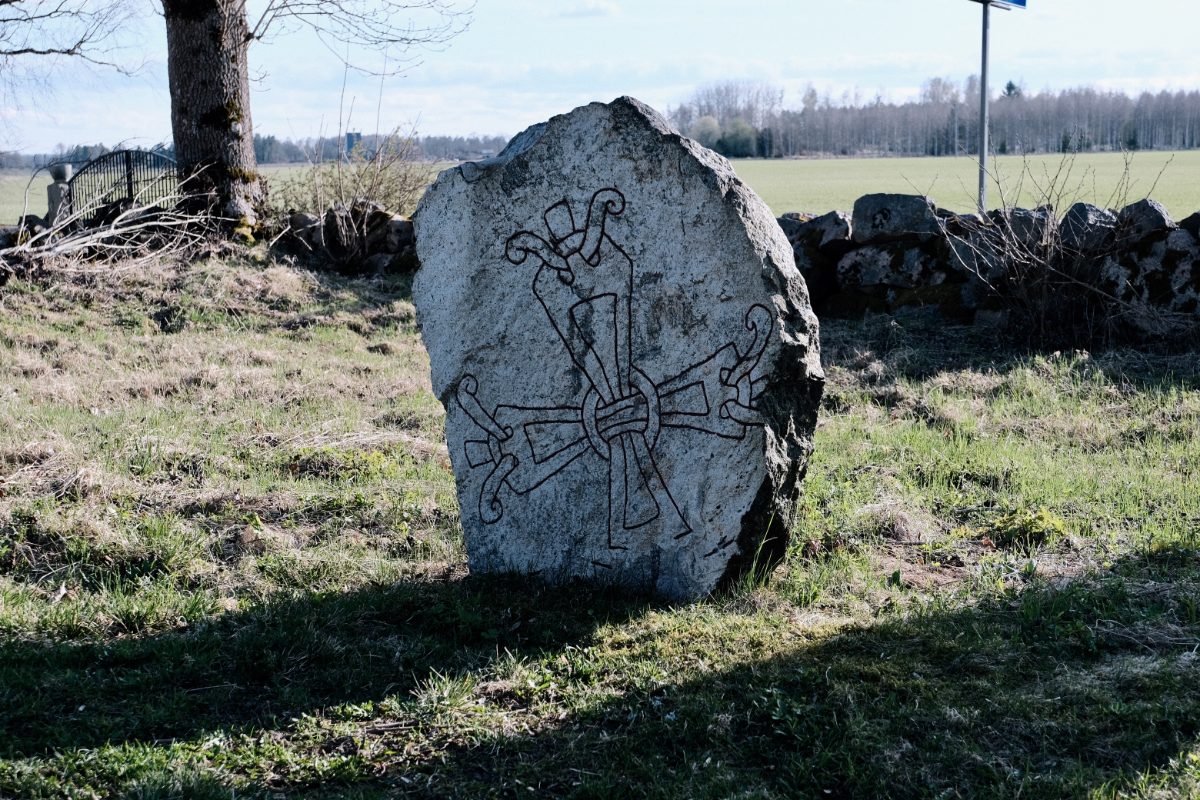
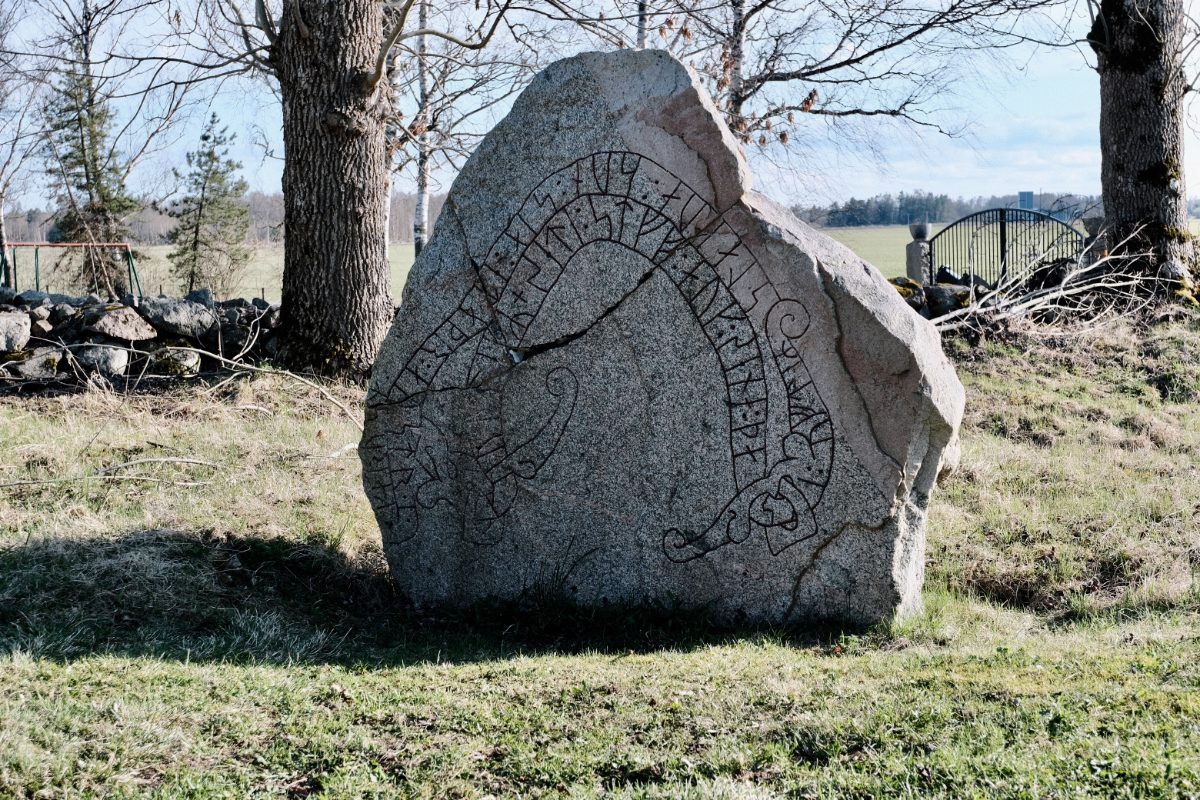
A rune stone stands in an open field in Rytterne parish near Västerås, its interlaced carving catching low spring light against a backdrop of a drystone wall and quiet farmland.
A rune stone at Rytterne carries a memorial inscription raised for a son who died in the east, its weathered arc of runes read now against the same fields and stone walls that have surrounded it for a thousand years.
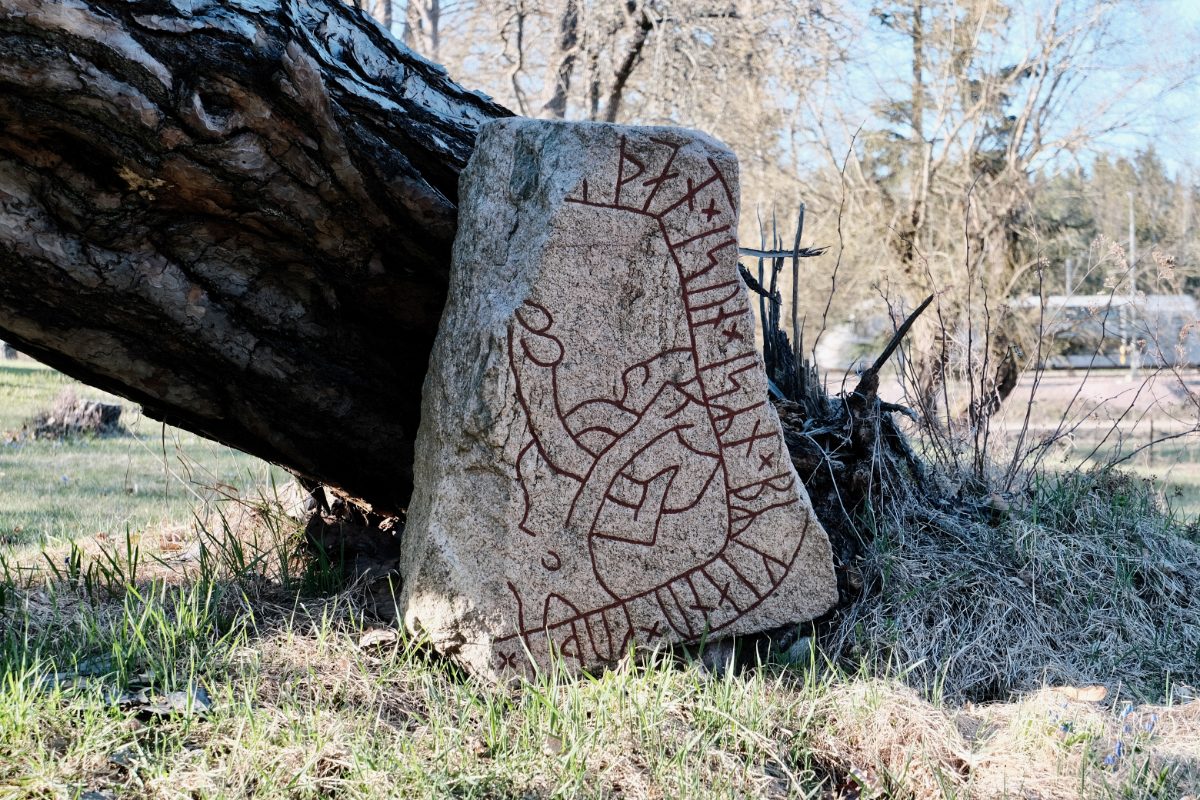
A worn fragment of a memorial stone stands propped against a fallen pine at Dingtuna, its faded prayer for a lost son still traceable in red-painted runes along the broken granite edge.
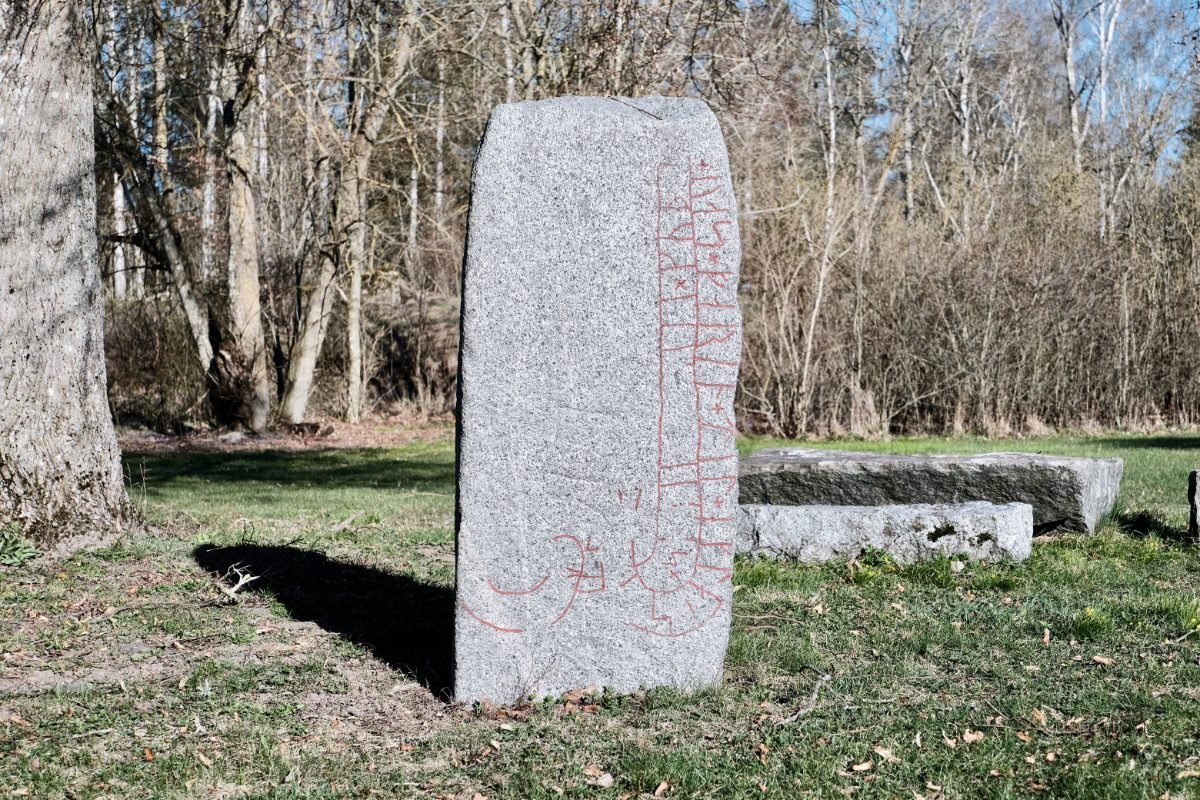
Carved by the rune-master Sigge, this stone at Dingtuna once marked the memory of a man who traveled to England and did not return, its faded runic band still legible where the granite meets tree shade and open lawn.