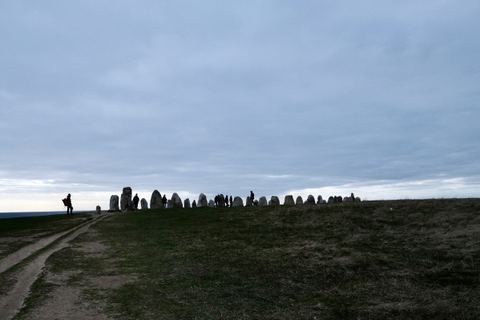
Nine metres high and some sixty-five across, Anundshög is the largest burial mound in Sweden, and it sits in open farmland outside Västerås with almost nothing between it and the sky. The scale registers late. From the road it reads as a low green hill; walking up, the slope keeps going, and the top takes longer to reach than it should.
The mound belongs to the Younger Iron Age, somewhere between 500 and 900 AD. A hearth found underneath it is older still — radiocarbon dated to between 210 and 540 — so people were gathering on this ground for centuries before anyone thought to pile earth over it. The name ties it to Bröt-Anund, a king out of legend rather than record. Nobody knows who is buried here, or whether anyone is.
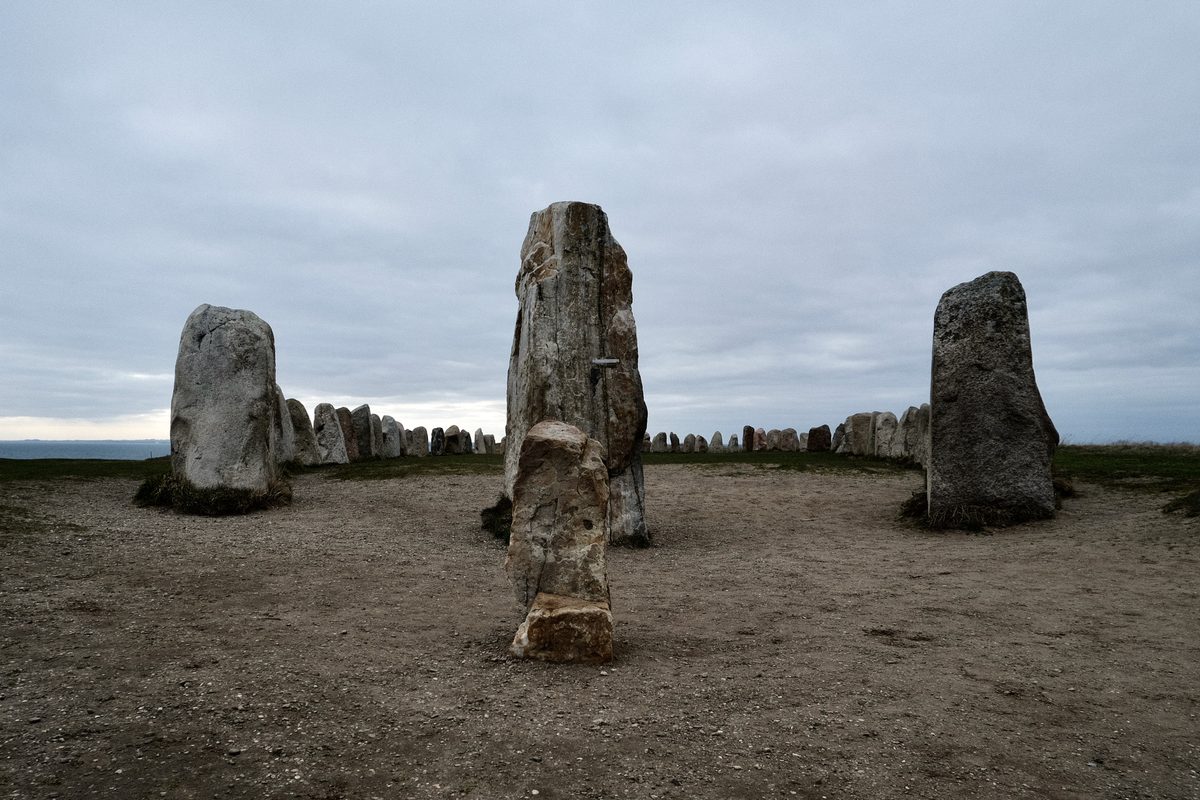
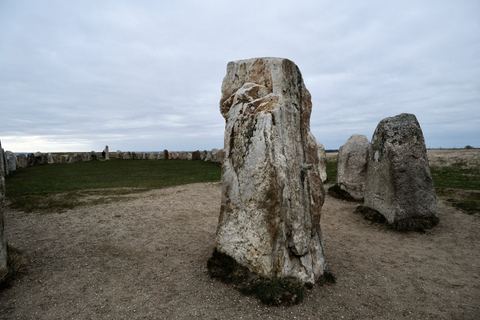
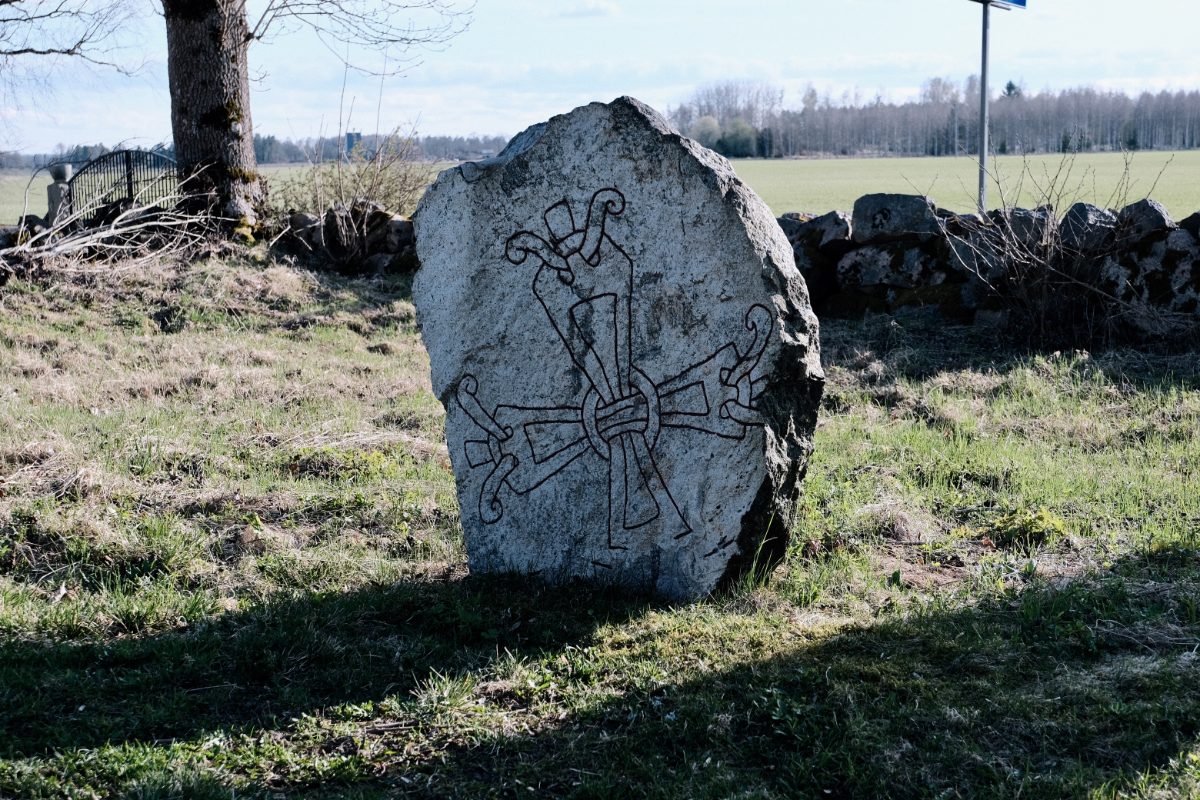
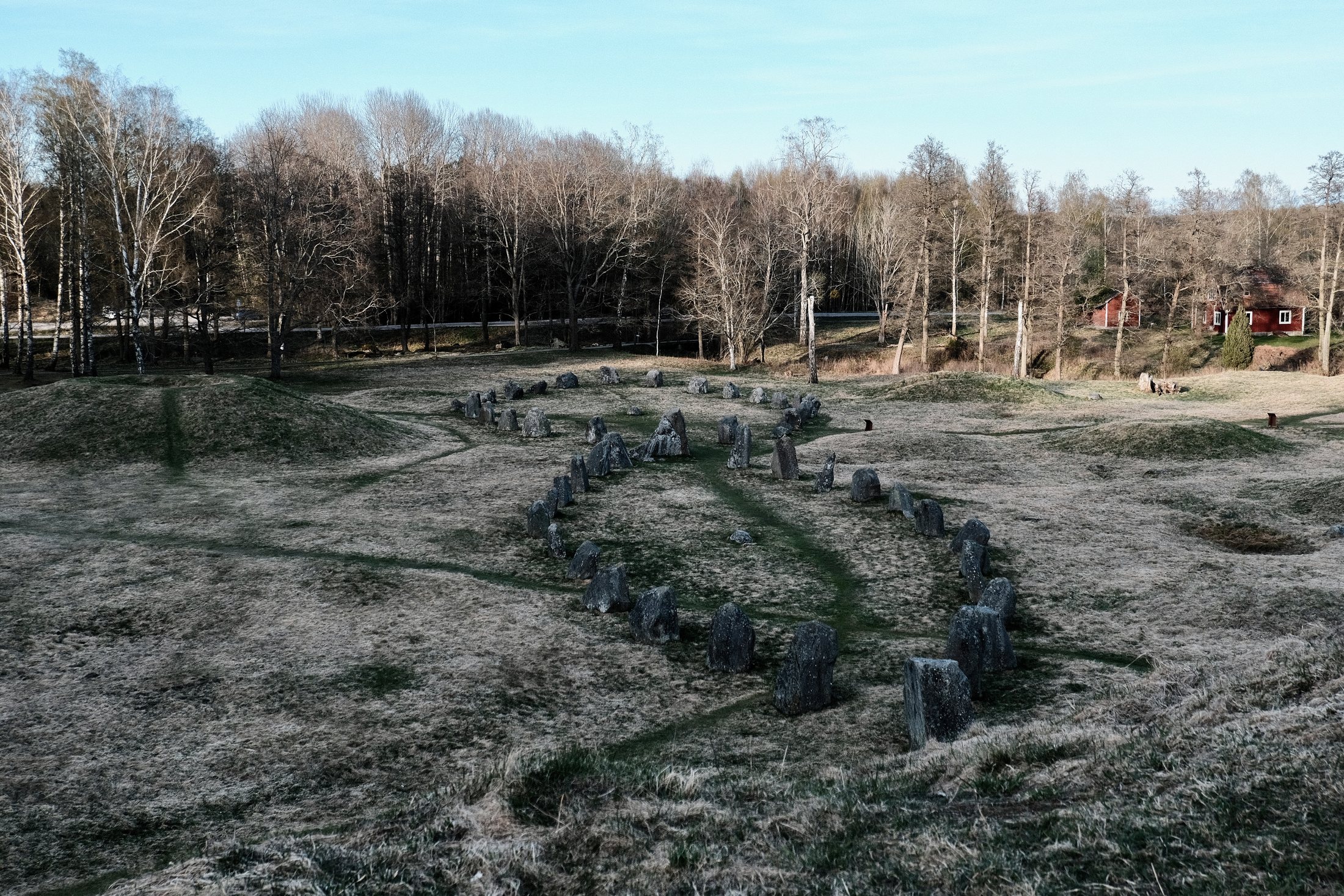
What surrounds the mound matters as much as the mound. Five stone ships lie alongside it, the largest around fifty-three metres from stem to stern — the outlines of vessels laid out in boulders, pointing nowhere. Beside them stands a row of fifteen stones, re-erected in the 1960s, tracing the line of the Eriksgata: the circuit a newly chosen king rode to be recognised by each province in turn. The dead and the road to power shared a field.
The stone in the row
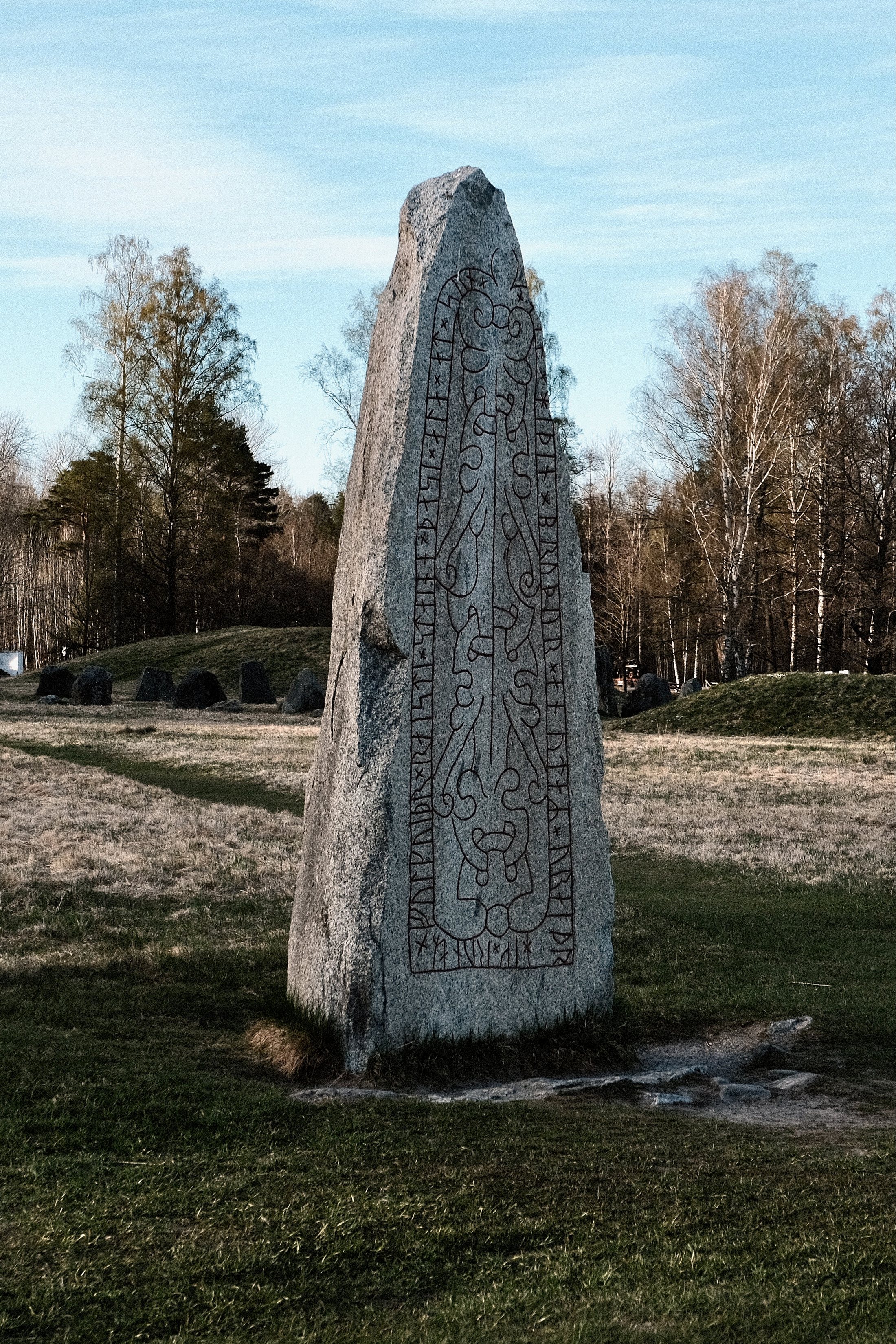
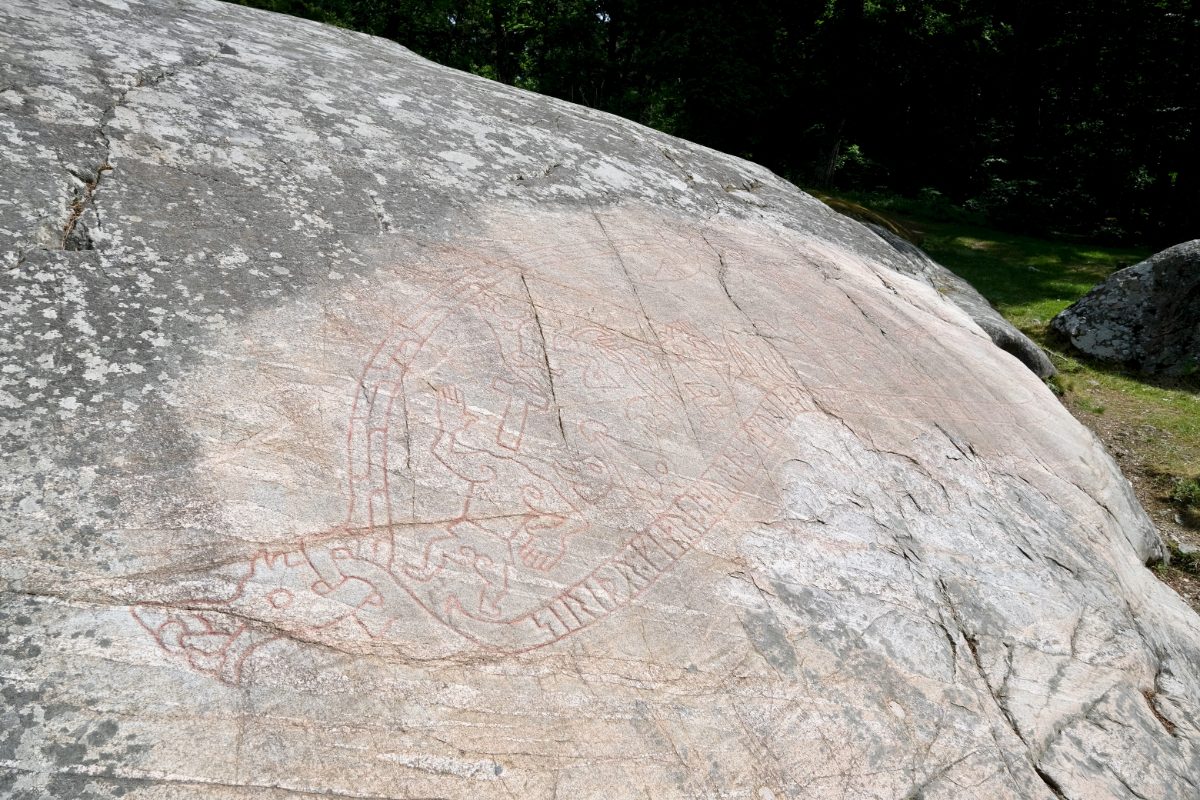
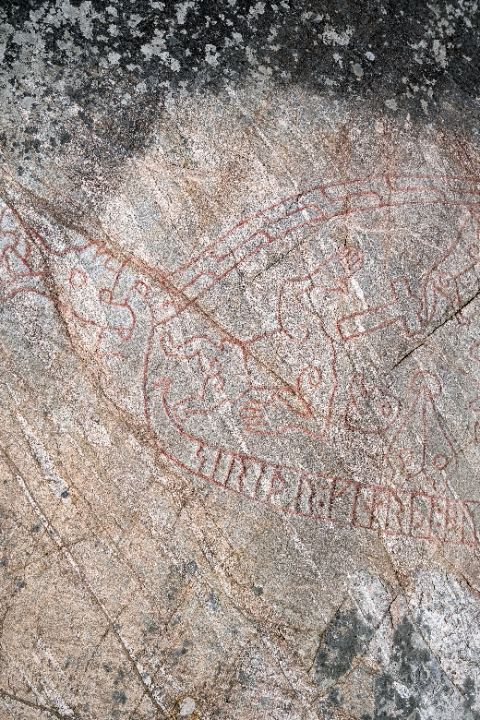
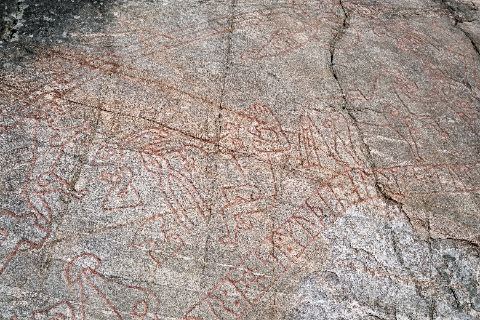
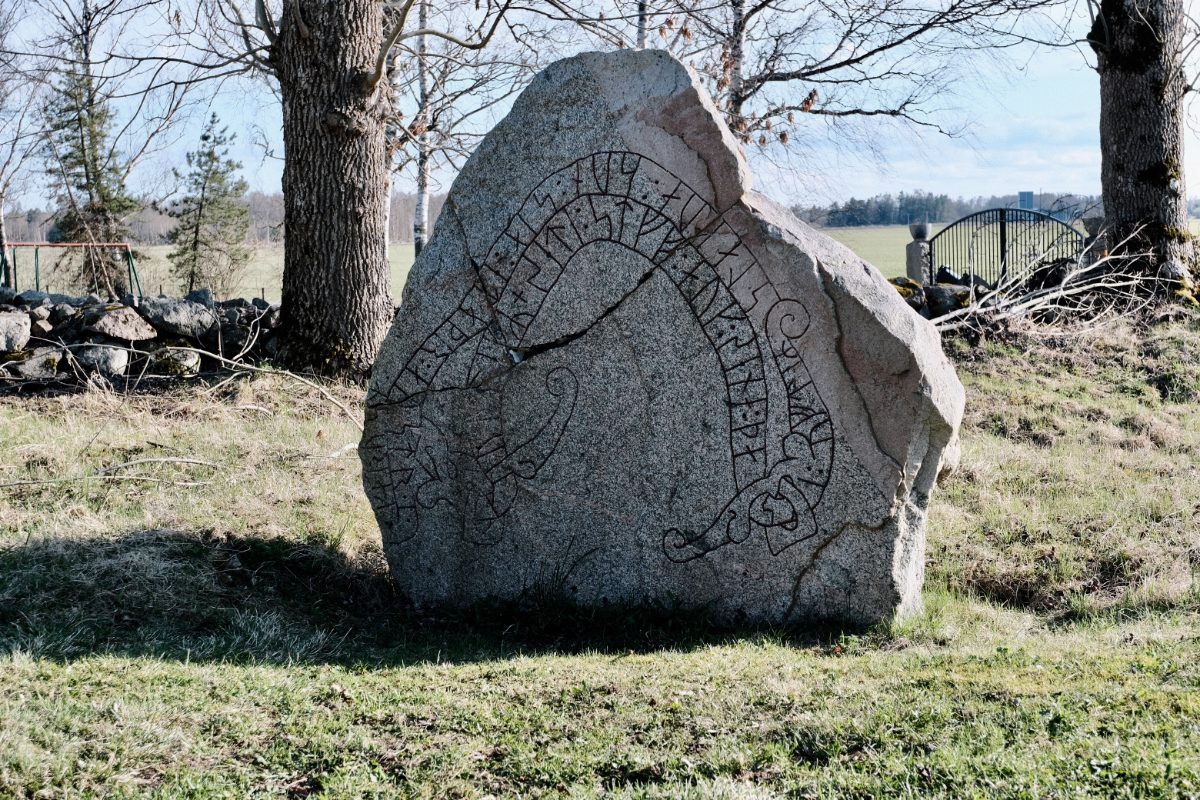
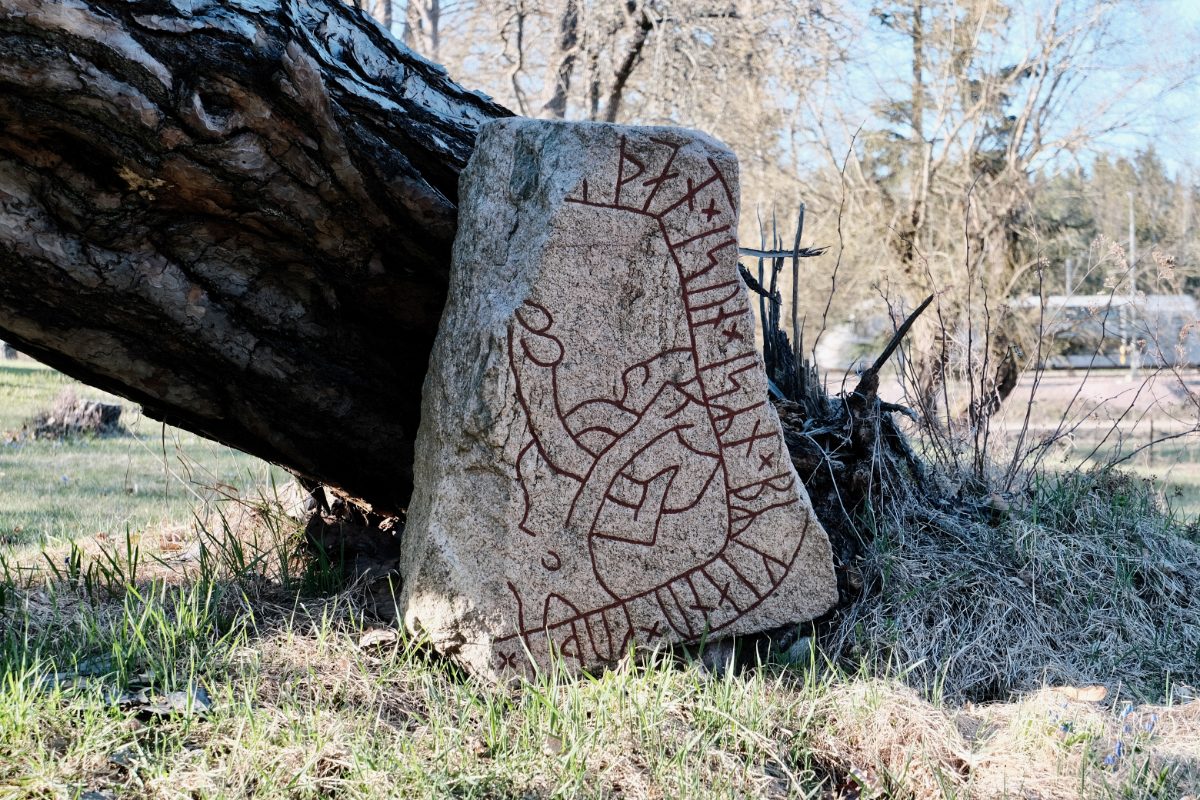
The central stone of that row is Vs 13, and it is the one to stop at. The inscription reads: “Folkvid raised all these stones in memory of his son Heden, Anund’s brother. Vred carved the runes.” A father naming his dead son, naming himself, and naming the man who cut the letters. Everything else on this site is anonymous — the mound, the ships, whoever lies under them. This one stone has three people in it.
Three names cut into one stone, in a field where nothing else has any.
That is what stays with me about Anundshög. The enormous things say nothing you can read; the small stone says something plainly, and the plain thing is what survived. Folkvid wanted his son remembered. Eleven hundred years on, standing in a field in Västmanland, it still works.