A square tower of dark brick on the ridge above the town, flag at the battlements. From the centre of Helsingborg there is almost nowhere you can stand without it in view. It has held that ridge for around seven hundred years, looking across the narrowest part of the Sound at Denmark.
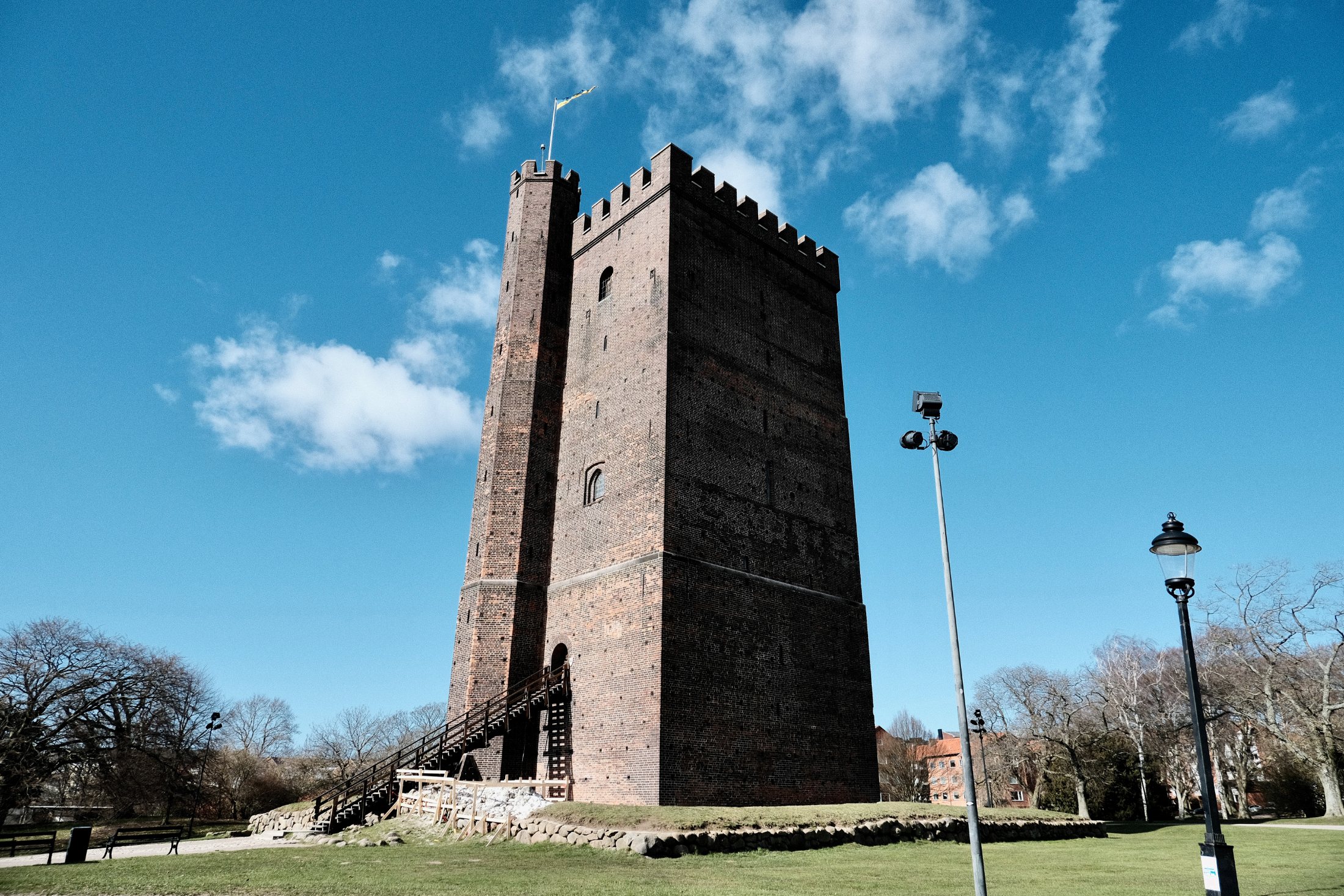
The first stones went down around 1310, when this was Danish land and Erik Menved was rebuilding the strongholds along the water. Ten years or so later the tower stood at roughly the height it stands now. Kärnan means the core, and the name is exact: this was the strongpoint in the middle of a much larger castle. Everything around it is gone.
What was left standing
Then a violent few centuries. The defences were rebuilt for cannon, fought over, and after Skåne passed to Sweden in 1658 they were pulled down. Someone proposed blowing up the keep as well. Nobody did, and the tower was left on its hill with nothing around it. It only took the name Kärnan in the 1700s, and it only opened to the public in 1894 — the landmark came long after the fortress.
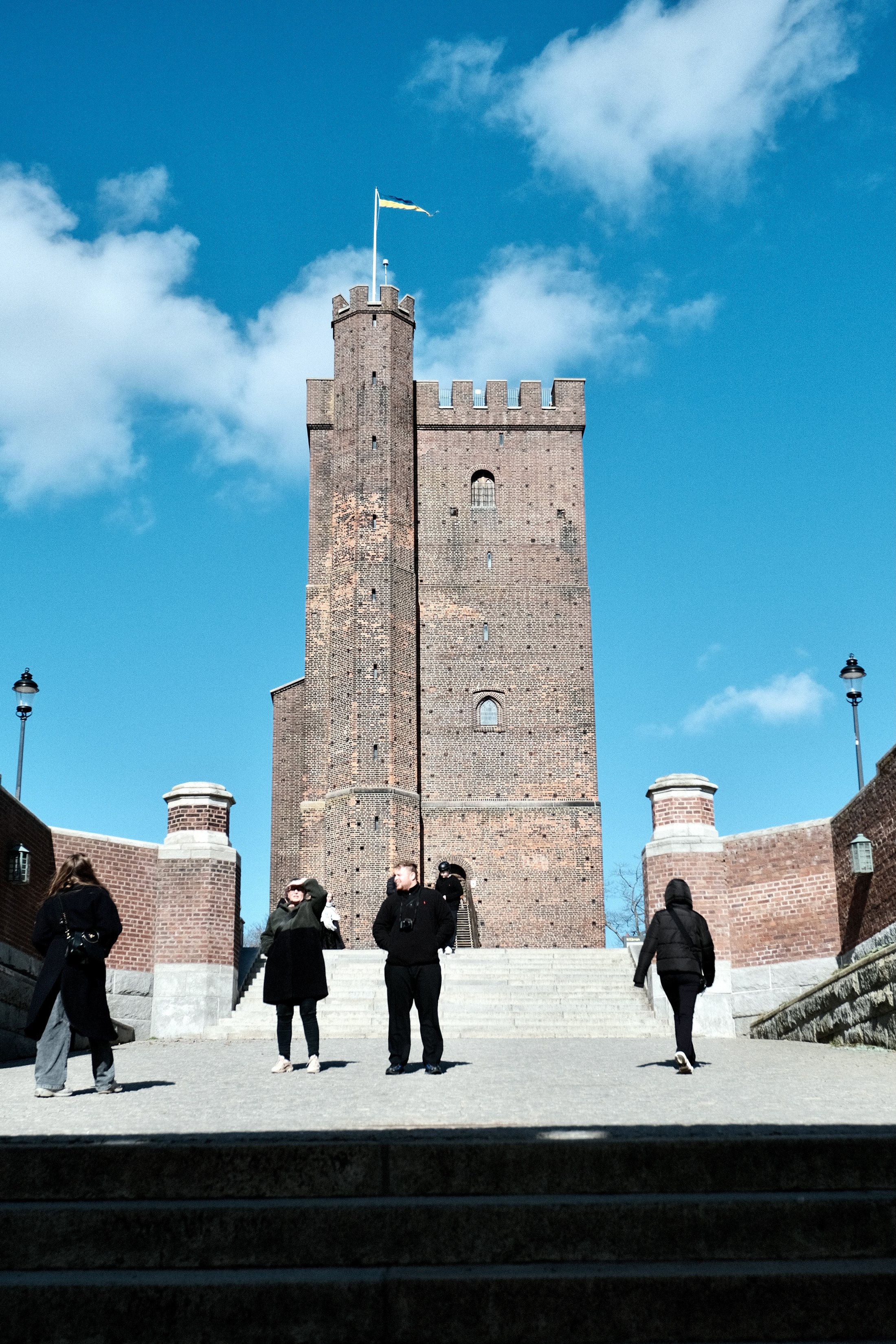
The climb is the other half of the site. From the square below, the Terrace Staircase runs straight up between twin round brick towers, past balustrades, arches and a bronze figure gone green. It was built to make the ascent an occasion, and it works.
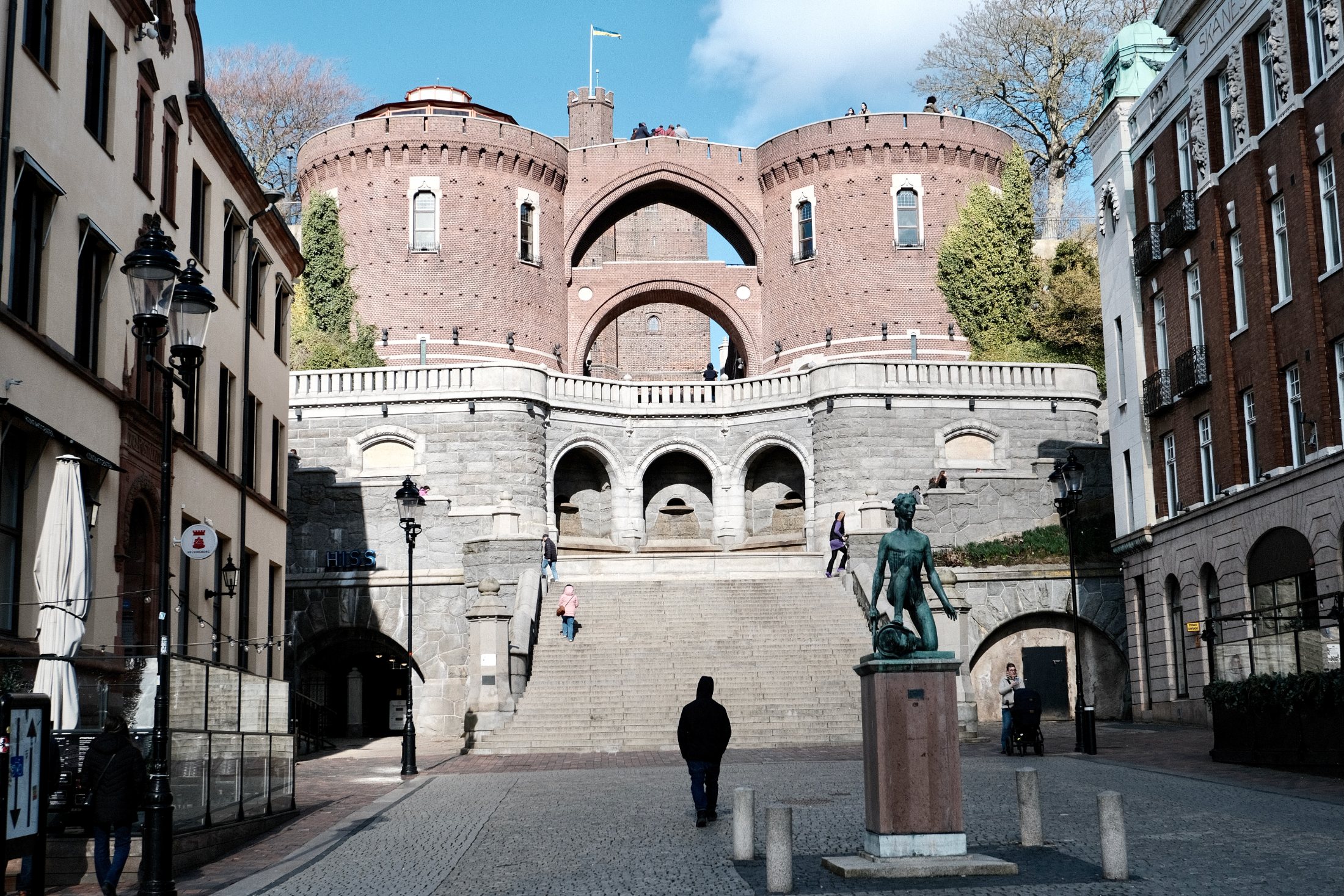
On a bright spring afternoon the steps belong more to the city than to the castle — people going up for the view rather than the history, shadows long across the stone. Kärnan is a fragment: one tower out of a fortress, standing because the order to remove it was never carried out. It has become the shape people draw when they draw Helsingborg. That is usually how landmarks work — not chosen for the job, just the last thing upright when everything around them came down.
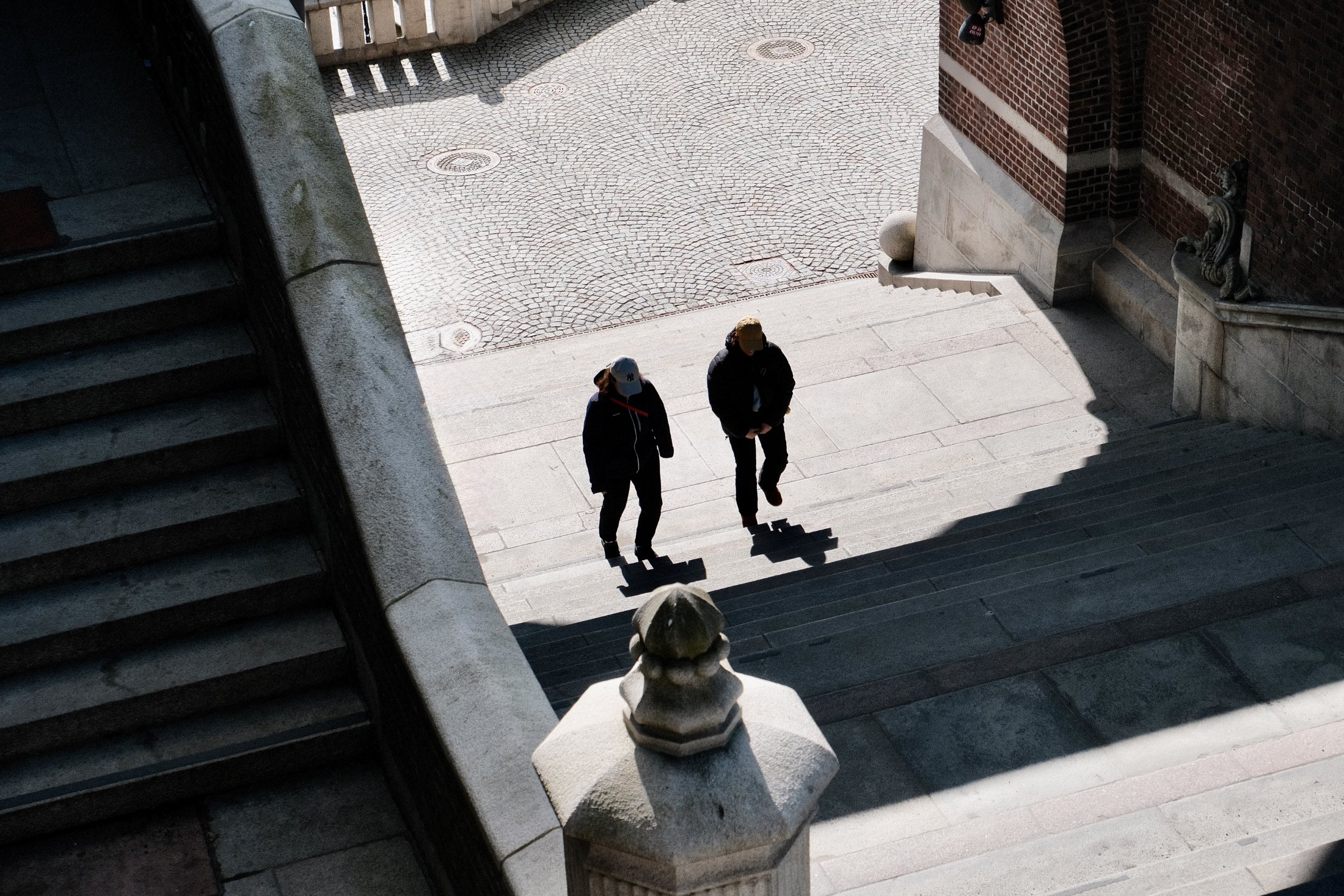
Seven hundred years of guarding the Sound, and still the easiest way to read the city is from its top.