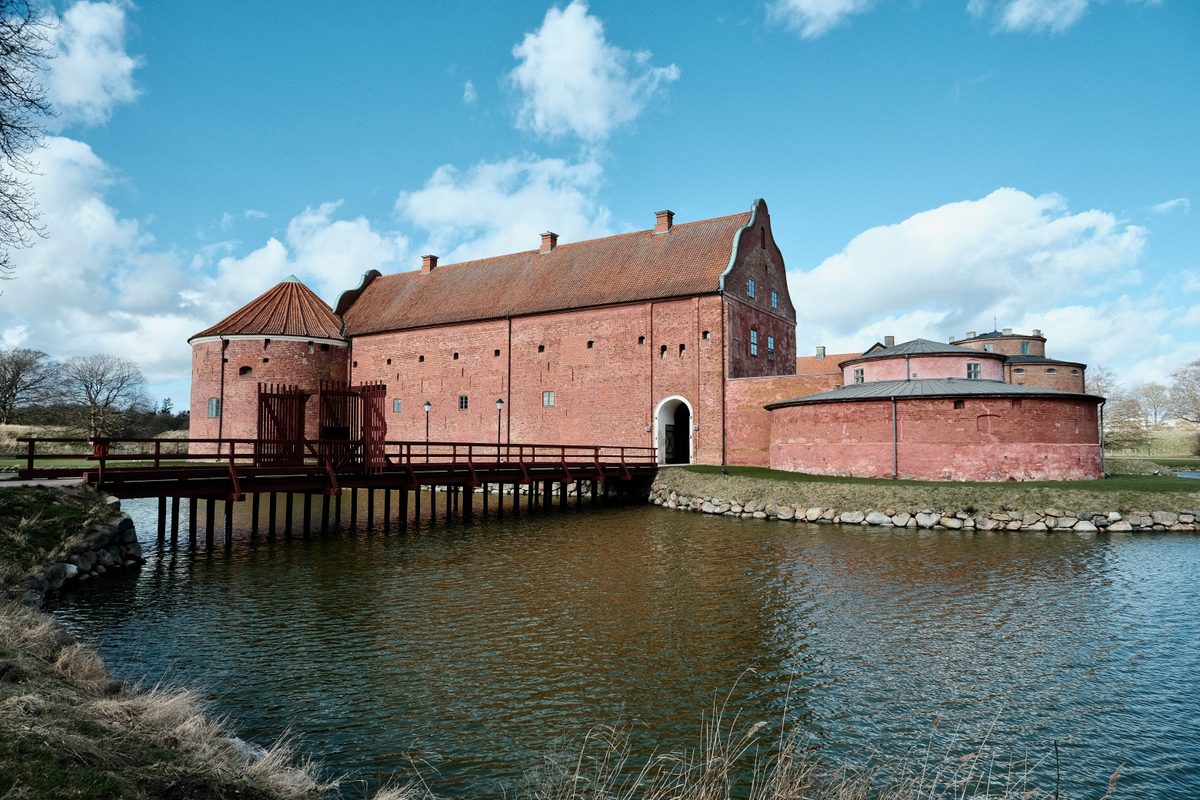
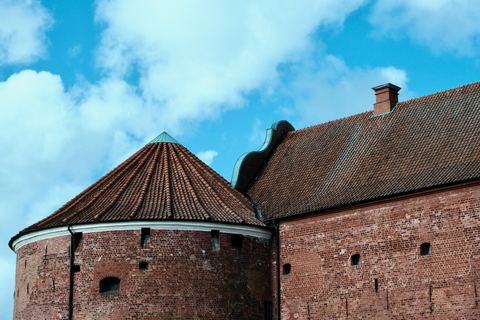
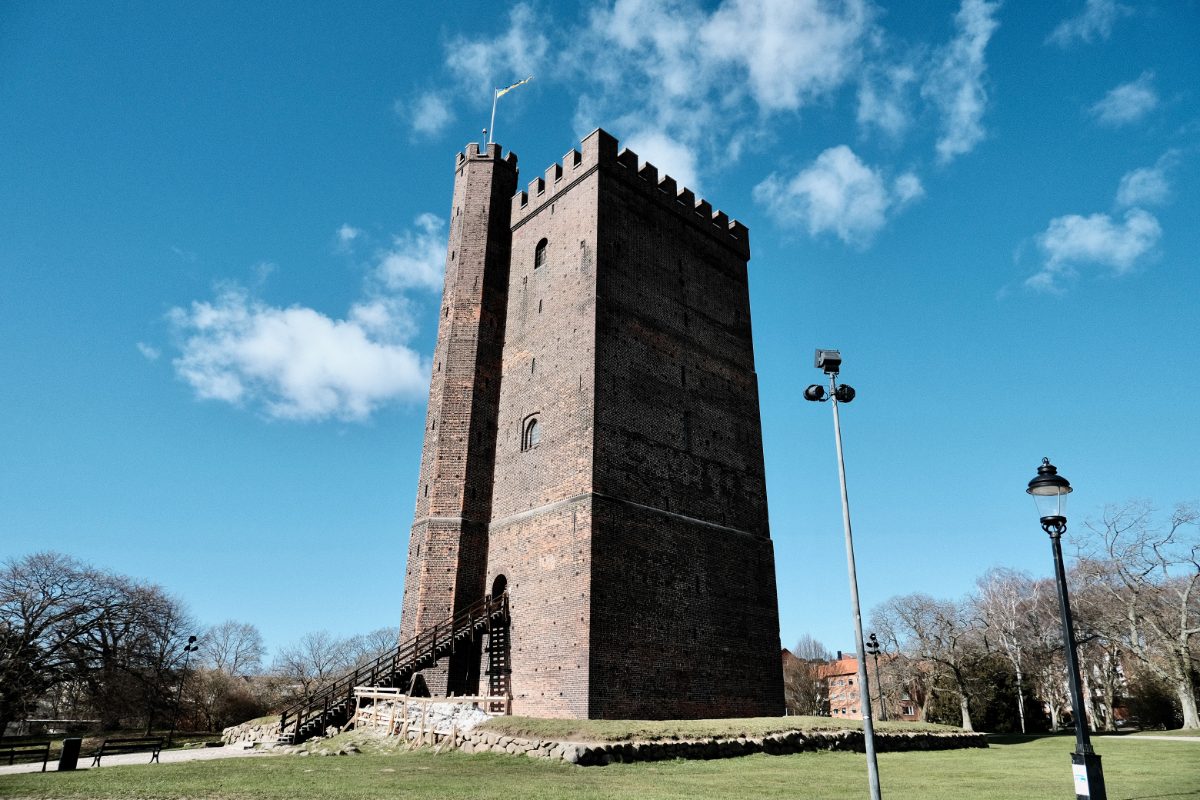
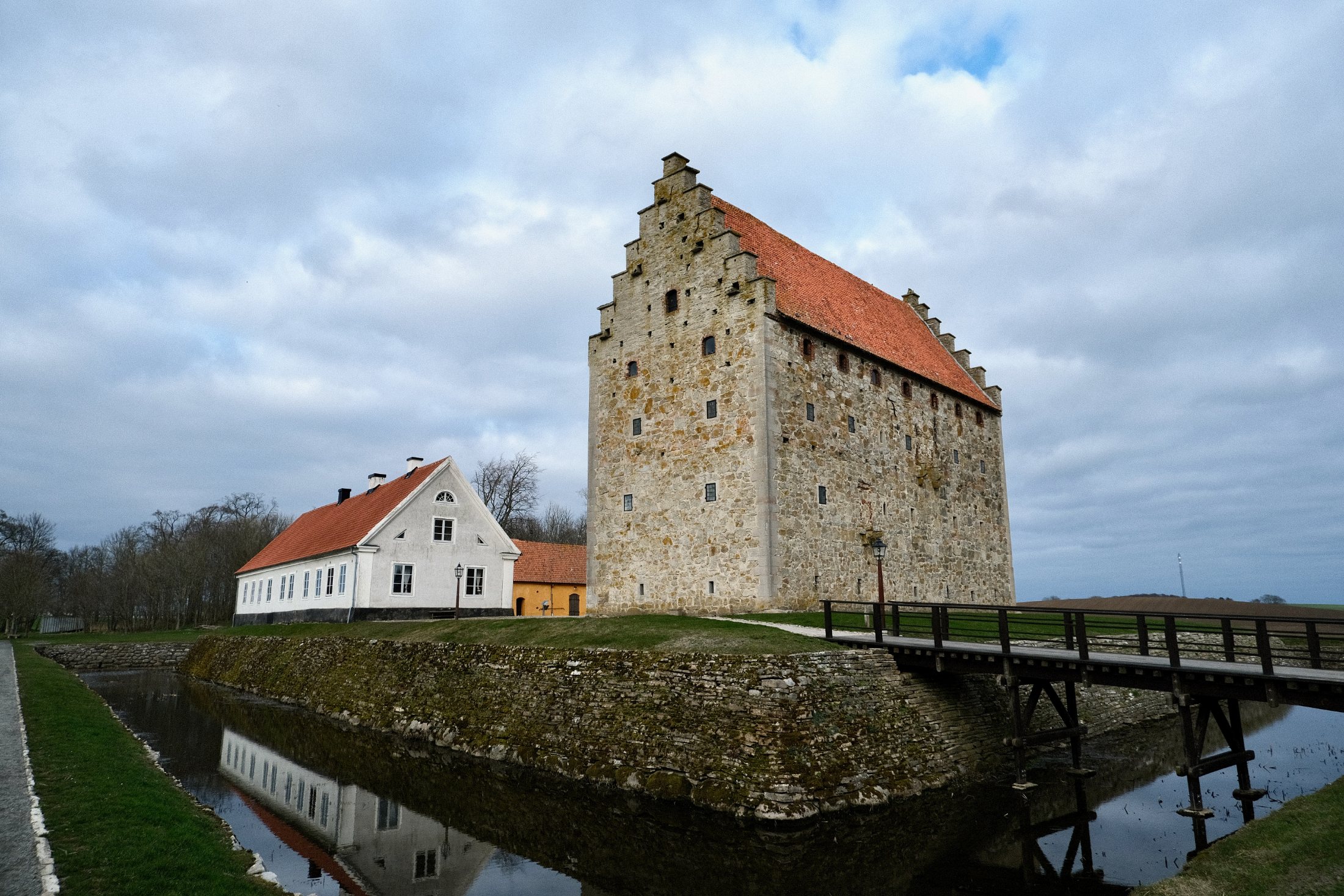
You see Glimmingehus long before you reach it: a single grey block of stone rising out of flat Skåne farmland, with no town around it and nothing to soften its outline against the sky. Up close the walls are immense, broken only by small windows set deep into the stone, and a still moat wraps the whole building like a dark ribbon.
Building began in 1499 for Jens Holgersen Ulfstand, a Danish knight and naval commander — this was Danish land then, and would stay so for another century and a half. The mason was Adam van Düren, a North German master who also worked on Lund Cathedral. They finished in 1506.
It is a fortified house rather than a castle, and much of the interior is a trap. False doors. Corridors that dead-end. Stairs cut to break the stride of anyone running up them. Murder-holes above the entrance passage for pouring boiling pitch onto whoever stood below. Some of that was meant for an army. A good deal of it was meant for the local peasantry.
Behind the walls
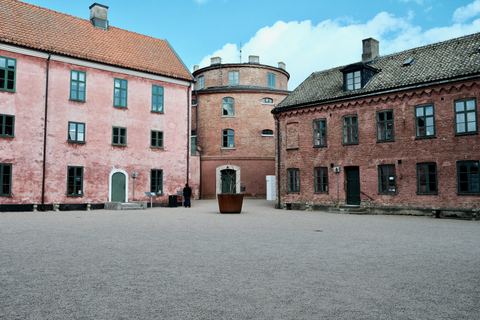
Step through the gate and the mood shifts. The cobbled courtyard is enclosed by low ochre-yellow outbuildings with red tile roofs — later additions from the farming centuries, when the great house had stopped being a fortress and become the heart of an estate.
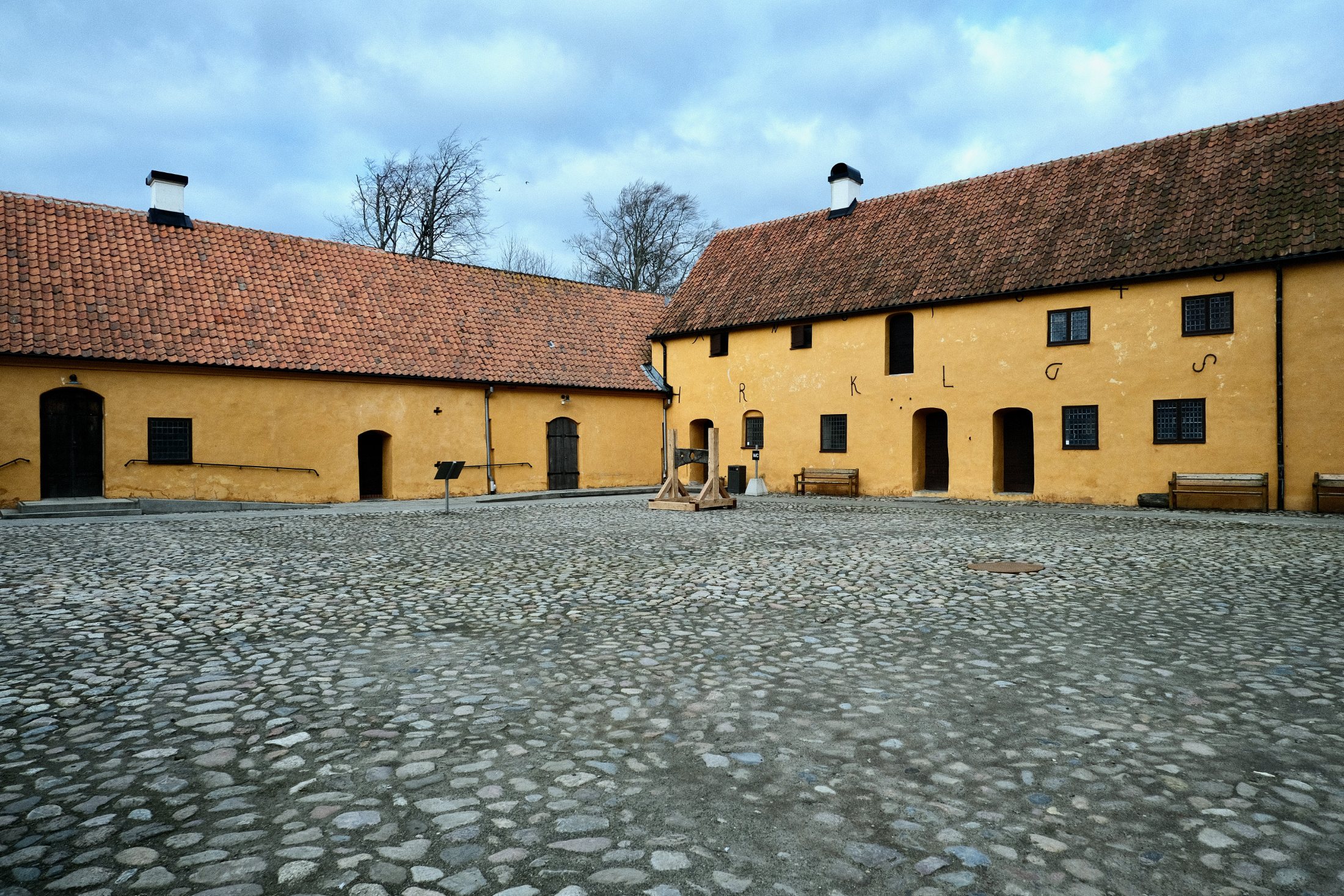
On a grey spring afternoon the yard is empty. A few steps separate the murder-holes from the cart sheds. The house was a fortress briefly and an estate for centuries, and it is the farm buildings that look lived in.
That it survives at all is down to an unglamorous accident. During the Scanian War in the 1670s, Charles XI ordered the house pulled down rather than let it fall back into Danish hands. The walls are two metres thick. The men sent to do it could not manage, and the order was quietly abandoned.
The moat and the wall thickness are what the photographs show. The part I think about is inside — false doors, corridors that end, stairs cut to trip anyone running up them. Those were not built for a Danish army. They were built for people who lived a mile away and worked Ulfstand's land. The house was pointed outward at the coast and inward at the neighbours.
A stronghold built to keep the world out, standing today with its gates wide open.